GHSA-4G2X-VQ5P-5VJ6
Vulnerability from github – Published: 2024-03-01 20:09 – Updated: 2024-08-15 17:02Impact
Previously, budibase used a library called vm2 for code execution inside the Budibase builder and apps, such as the UI below for configuring bindings in the design section.
Due to a vulnerability in vm2, any environment that executed the code server side (automations and column formulas) was susceptible to this vulnerability, allowing users to escape the sandbox provided by vm2, and to expose server side variables such as process.env. It's recommended by the authors of vm2 themselves that you should move to another solution for remote JS execution due to this vulnerability.
Patches
We moved our entire JS sandbox infrastructure over to isolated-vm, a much more secure and recommended library for remote code execution in 2.20.0. This also comes with a performance benefit in the way we cache and execute your JS server side. The budibase cloud platform has been patched already and is not running vm2, but self host users will need to manage the updates by themselves.
If you are a self hosted user, you can take the following steps to reproduce the exploit and to verify if your installation is currently affected.
Create a new formula column on one of your tables in the data section with the following configuration.
Add the following JS function to the formula and save.
If your installation is vulnerable, when the formula evaluates you will be able to see the printed process.env in your new formula field. If not, your installation is not affected.
Workarounds
There is no workaround at this time for any budibase app that uses JS. You must fully migrate post version 2.20.0 to patch the vulnerability.
References
- https://github.com/advisories/GHSA-cchq-frgv-rjh5
{
"affected": [
{
"package": {
"ecosystem": "npm",
"name": "@budibase/server"
},
"ranges": [
{
"events": [
{
"introduced": "0"
},
{
"fixed": "2.20.0"
}
],
"type": "ECOSYSTEM"
}
]
}
],
"aliases": [],
"database_specific": {
"cwe_ids": [
"CWE-94"
],
"github_reviewed": true,
"github_reviewed_at": "2024-03-01T20:09:00Z",
"nvd_published_at": null,
"severity": "CRITICAL"
},
"details": "### Impact\nPreviously, budibase used a library called `vm2` for code execution inside the Budibase builder and apps, such as the UI below for configuring bindings in the design section.\n\n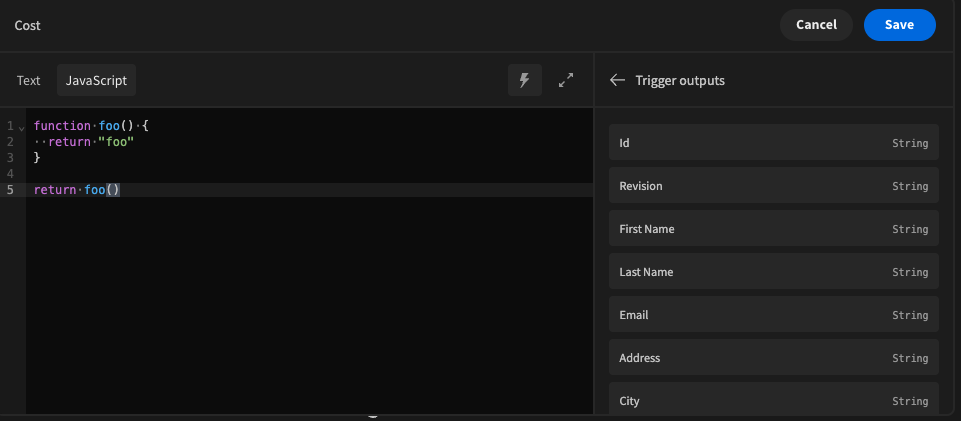\n\nDue to a [vulnerability in vm2](https://github.com/advisories/GHSA-cchq-frgv-rjh5), any environment that executed the code server side (automations and column formulas) was susceptible to this vulnerability, allowing users to escape the sandbox provided by `vm2`, and to expose server side variables such as `process.env`. It\u0027s recommended by the authors of `vm2` themselves that you should move to another solution for remote JS execution due to this vulnerability.\n\n### Patches\nWe moved our entire JS sandbox infrastructure over to `isolated-vm`, a much more secure and recommended library for remote code execution in 2.20.0. This also comes with a performance benefit in the way we cache and execute your JS server side. The budibase cloud platform has been patched already and is not running `vm2`, but self host users will need to manage the updates by themselves.\n\nIf you are a self hosted user, you can take the following steps to reproduce the exploit and to verify if your installation is currently affected.\n\nCreate a new formula column on one of your tables in the data section with the following configuration.\n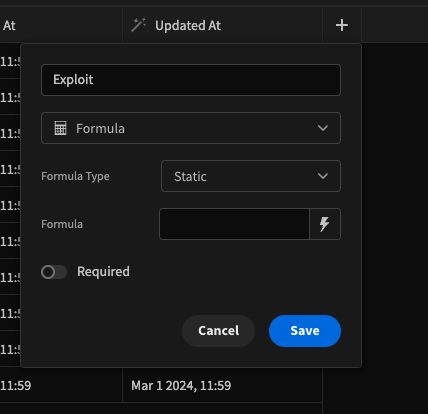\n\nAdd the following JS function to the formula and save.\n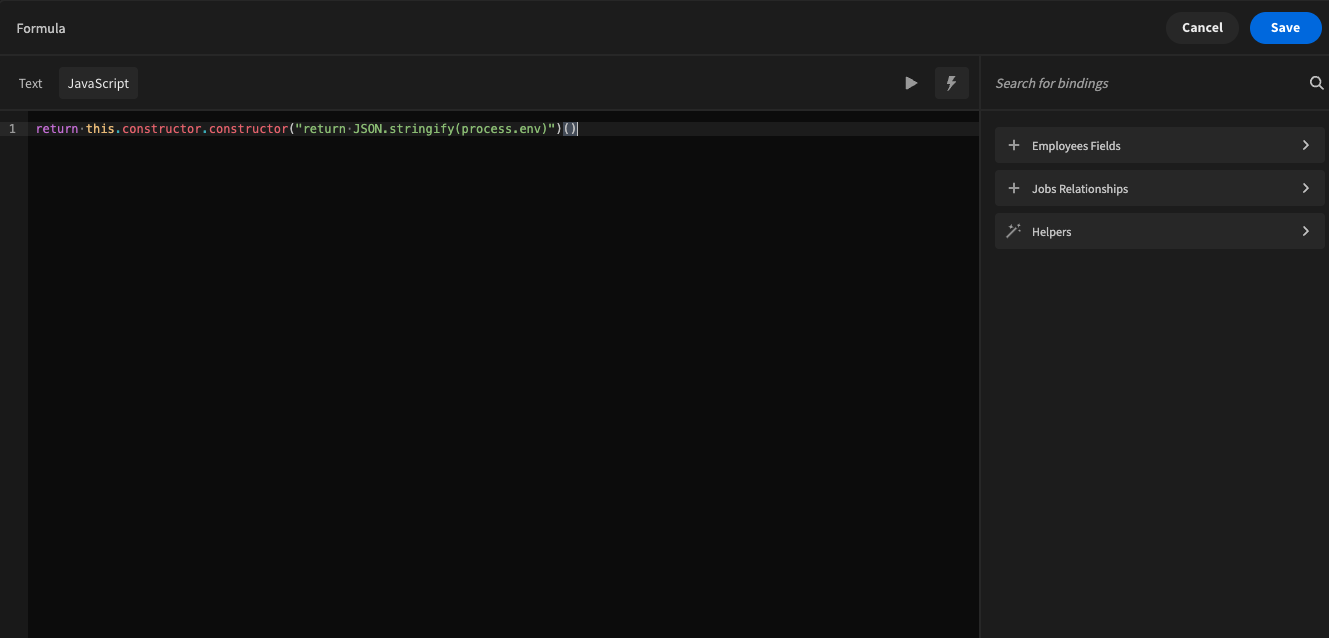\n\nIf your installation is vulnerable, when the formula evaluates you will be able to see the printed `process.env` in your new formula field. If not, your installation is not affected.\n\n### Workarounds\nThere is no workaround at this time for any budibase app that uses JS. You must fully migrate post version 2.20.0 to patch the vulnerability.\n\n### References\n- https://github.com/advisories/GHSA-cchq-frgv-rjh5\n",
"id": "GHSA-4g2x-vq5p-5vj6",
"modified": "2024-08-15T17:02:27Z",
"published": "2024-03-01T20:09:00Z",
"references": [
{
"type": "WEB",
"url": "https://github.com/Budibase/budibase/security/advisories/GHSA-4g2x-vq5p-5vj6"
},
{
"type": "WEB",
"url": "https://github.com/patriksimek/vm2/security/advisories/GHSA-cchq-frgv-rjh5"
},
{
"type": "WEB",
"url": "https://github.com/Budibase/budibase/commit/601c02a4acc695b1cc602bf611f0ae66d6e5868f"
},
{
"type": "PACKAGE",
"url": "https://github.com/Budibase/budibase"
}
],
"schema_version": "1.4.0",
"severity": [
{
"score": "CVSS:3.1/AV:N/AC:L/PR:N/UI:N/S:U/C:H/I:H/A:H",
"type": "CVSS_V3"
}
],
"summary": "Budibase affected by VM2 Constructor Escape Vulnerability"
}
Sightings
| Author | Source | Type | Date | Other |
|---|
Nomenclature
- Seen: The vulnerability was mentioned, discussed, or observed by the user.
- Confirmed: The vulnerability has been validated from an analyst's perspective.
- Published Proof of Concept: A public proof of concept is available for this vulnerability.
- Exploited: The vulnerability was observed as exploited by the user who reported the sighting.
- Patched: The vulnerability was observed as successfully patched by the user who reported the sighting.
- Not exploited: The vulnerability was not observed as exploited by the user who reported the sighting.
- Not confirmed: The user expressed doubt about the validity of the vulnerability.
- Not patched: The vulnerability was not observed as successfully patched by the user who reported the sighting.

The approach is described in our paper Mapping CVEs to MITRE ATT&CK Techniques: A Curated Gold-Set Classifier and the Limits of LLM-Assisted Label Expansion.
Browse all ATT&CK techniques and the vulnerabilities related to each.
Related by attack behaviour
Vulnerabilities whose description is nearest to this one in the vector space of the CIRCL/vulnerability-attack-technique-biencoder model. This is a similarity search over the bi-encoder space (plain cosine), not a classification, and it has no measured accuracy.