CWE-644
Weakness AllowedImproper Neutralization of HTTP Headers for Scripting Syntax
Abstraction: Variant · Status: Incomplete
The product does not neutralize or incorrectly neutralizes web scripting syntax in HTTP headers that can be used by web browser components that can process raw headers, such as Flash.
Mapping guidance
This CWE entry is at the Variant level of abstraction, which is a preferred level of abstraction for mapping to the root causes of vulnerabilities.
Carefully read both the name and description to ensure that this mapping is an appropriate fit. Do not try to 'force' a mapping to a lower-level Base/Variant simply to comply with this preferred level of abstraction.
Modes of introduction
Content history
added/updated demonstrative examples
updated Common_Consequences, Relationships, Observed_Example
updated Description, Name, Observed_Examples, Relationships
updated Relationships
updated Description, Name
updated Common_Consequences
updated Description, Name
updated Demonstrative_Examples, Description, Observed_Examples
updated Common_Consequences
updated Description
updated Common_Consequences
updated Relationships
updated Potential_Mitigations
updated Relationships, Taxonomy_Mappings
updated Applicable_Platforms, Enabling_Factors_for_Exploitation
updated Applicable_Platforms, Relationships
updated Relationships
updated Description
updated Relationships, Time_of_Introduction
updated Mapping_Notes
updated Applicable_Platforms, Relationships, Weakness_Ordinalities
updated Common_Consequences, Description, Potential_Mitigations
122 vulnerabilities reference this CWE, most recent first.
GHSA-XFJ2-W4FV-CG6J
Vulnerability from github – Published: 2025-11-20 15:30 – Updated: 2025-11-20 15:30A weakness has been identified in jameschz Hush Framework 2.0. The impacted element is an unknown function of the file Hush\hush-lib\hush\Util.php of the component HTTP Host Header Handler. This manipulation of the argument $_SERVER['HOST'] causes improper neutralization of http headers for scripting syntax. The attack is possible to be carried out remotely. The exploit has been made available to the public and could be exploited. The vendor was contacted early about this disclosure but did not respond in any way.
{
  "affected": [],
  "aliases": [
    "CVE-2025-13434"
  ],
  "database_specific": {
    "cwe_ids": [
      "CWE-644"
    ],
    "github_reviewed": false,
    "github_reviewed_at": null,
    "nvd_published_at": "2025-11-20T15:17:24Z",
    "severity": "MODERATE"
  },
  "details": "A weakness has been identified in jameschz Hush Framework 2.0. The impacted element is an unknown function of the file Hush\\hush-lib\\hush\\Util.php of the component HTTP Host Header Handler. This manipulation of the argument $_SERVER[\u0027HOST\u0027] causes improper neutralization of http headers for scripting syntax. The attack is possible to be carried out remotely. The exploit has been made available to the public and could be exploited. The vendor was contacted early about this disclosure but did not respond in any way.",
  "id": "GHSA-xfj2-w4fv-cg6j",
  "modified": "2025-11-20T15:30:23Z",
  "published": "2025-11-20T15:30:23Z",
  "references": [
    {
      "type": "ADVISORY",
      "url": "https://nvd.nist.gov/vuln/detail/CVE-2025-13434"
    },
    {
      "type": "WEB",
      "url": "https://github.com/lakshayyverma/CVE-Discovery/blob/main/hush.md"
    },
    {
      "type": "WEB",
      "url": "https://vuldb.com/?ctiid.332978"
    },
    {
      "type": "WEB",
      "url": "https://vuldb.com/?id.332978"
    },
    {
      "type": "WEB",
      "url": "https://vuldb.com/?submit.687568"
    }
  ],
  "schema_version": "1.4.0",
  "severity": [
    {
      "score": "CVSS:3.1/AV:N/AC:L/PR:N/UI:N/S:U/C:N/I:L/A:N",
      "type": "CVSS_V3"
    },
    {
      "score": "CVSS:4.0/AV:N/AC:L/AT:N/PR:N/UI:N/VC:N/VI:L/VA:N/SC:N/SI:N/SA:N/E:P/CR:X/IR:X/AR:X/MAV:X/MAC:X/MAT:X/MPR:X/MUI:X/MVC:X/MVI:X/MVA:X/MSC:X/MSI:X/MSA:X/S:X/AU:X/R:X/V:X/RE:X/U:X",
      "type": "CVSS_V4"
    }
  ]
}
GHSA-XHFX-HGMF-V6VP
Vulnerability from github – Published: 2021-03-10 21:07 – Updated: 2025-05-29 23:26Impact
When running on servers that are configured to accept a wildcard as a hostname (i.e. the server routes any request, regardless of the HOST header to an October CMS instance) the potential exists for Host Header Poisoning attacks to succeed. See the following resources for more information on Host Header Poisoning: - https://portswigger.net/web-security/host-header - https://dzone.com/articles/what-is-a-host-header-attack
Patches
A feature has been added in v1.1.2 to allow a set of trusted hosts to be specified in the application.
Workarounds
-
Apply https://github.com/octobercms/library/commit/f86fcbcd066d6f8b939e8fe897409d152b11c3c6 & https://github.com/octobercms/october/commit/f638d3f78cfe91d7f6658820f9d5e424306a3db0 to your installation manually if unable to upgrade to v1.1.2.
-
Check that the configuration setting
cms.linkPolicyis set toforce.
Alternative Workaround
Check to make sure that your web server does not accept any hostname when serving your web application.
- Add an entry called
testing.tldto your computer's host file and direct it to your server's IP address - Open the address
testing.tldin your web browser - Make sure an October CMS website is not available at this address
If an October CMS website is returned, configure your webserver to only allow known hostnames. If you require assistance with this, please contact your server administrator.
References
Reported by Abdullah Hussam
For More Information
If you have any questions or comments about this advisory: * Email us at hello@octobercms.com
Threat Assessment
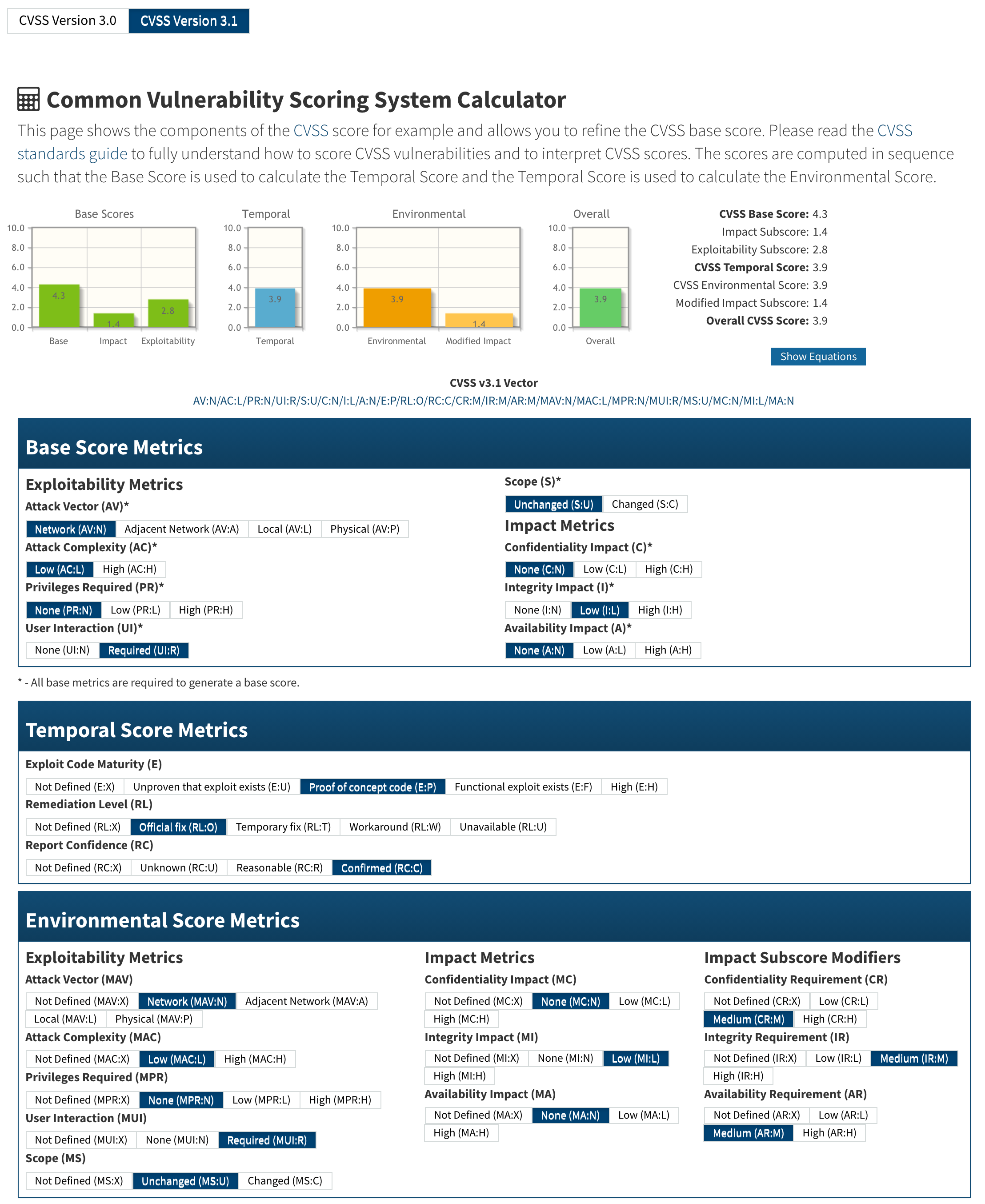
{
  "affected": [
    {
      "package": {
        "ecosystem": "Packagist",
        "name": "october/backend"
      },
      "ranges": [
        {
          "events": [
            {
              "introduced": "0"
            },
            {
              "fixed": "1.1.2"
            }
          ],
          "type": "ECOSYSTEM"
        }
      ]
    }
  ],
  "aliases": [
    "CVE-2021-21265"
  ],
  "database_specific": {
    "cwe_ids": [
      "CWE-644"
    ],
    "github_reviewed": true,
    "github_reviewed_at": "2021-03-10T21:07:08Z",
    "nvd_published_at": "2021-03-10T22:15:00Z",
    "severity": "LOW"
  },
  "details": "### Impact\nWhen running on servers that are configured to accept a wildcard as a hostname (i.e. the server routes any request, regardless of the HOST header to an October CMS instance) the potential exists for Host Header Poisoning attacks to succeed. See the following resources for more information on Host Header Poisoning:\n- https://portswigger.net/web-security/host-header\n- https://dzone.com/articles/what-is-a-host-header-attack\n\n### Patches\n\nA feature has been added in v1.1.2 to allow a set of trusted hosts to be specified in the application.\n\n### Workarounds\n\n- Apply https://github.com/octobercms/library/commit/f86fcbcd066d6f8b939e8fe897409d152b11c3c6 \u0026 https://github.com/octobercms/october/commit/f638d3f78cfe91d7f6658820f9d5e424306a3db0 to your installation manually if unable to upgrade to v1.1.2.\n\n- Check that the configuration setting `cms.linkPolicy` is set to `force`.\n\n### Alternative Workaround\n\nCheck to make sure that your web server does not accept any hostname when serving your web application.\n\n1. Add an entry called `testing.tld` to your computer\u0027s host file and direct it to your server\u0027s IP address\n2. Open the address `testing.tld` in your web browser\n3. Make sure an October CMS website is not available at this address\n\nIf an October CMS website is returned, configure your webserver to only allow known hostnames. If you require assistance with this, please contact your server administrator.\n\n### References\n\nReported by [Abdullah Hussam](https://github.com/ahussam)\n\n### For More Information\n\nIf you have any questions or comments about this advisory:\n* Email us at [hello@octobercms.com](mailto:hello@octobercms.com)\n\n### Threat Assessment\n\u003cimg width=\"1108\" alt=\"Screen Shot 2021-01-15 at 4 12 57 PM\" src=\"https://user-images.githubusercontent.com/7253840/104783859-92fb3600-574c-11eb-9e21-c0dc05d230a9.png\"\u003e",
  "id": "GHSA-xhfx-hgmf-v6vp",
  "modified": "2025-05-29T23:26:01Z",
  "published": "2021-03-10T21:07:25Z",
  "references": [
    {
      "type": "WEB",
      "url": "https://github.com/octobercms/october/security/advisories/GHSA-xhfx-hgmf-v6vp"
    },
    {
      "type": "ADVISORY",
      "url": "https://nvd.nist.gov/vuln/detail/CVE-2021-21265"
    },
    {
      "type": "WEB",
      "url": "https://github.com/octobercms/library/commit/f29865ae3db7a03be7c49294cd93980ec457f10d"
    },
    {
      "type": "WEB",
      "url": "https://github.com/octobercms/library/commit/f86fcbcd066d6f8b939e8fe897409d152b11c3c6"
    },
    {
      "type": "WEB",
      "url": "https://github.com/octobercms/october/commit/555ab61f2313f45d7d5d138656420ead536c5d30"
    },
    {
      "type": "WEB",
      "url": "https://github.com/octobercms/october/commit/f638d3f78cfe91d7f6658820f9d5e424306a3db0"
    },
    {
      "type": "WEB",
      "url": "https://packagist.org/packages/october/backend"
    }
  ],
  "schema_version": "1.4.0",
  "severity": [],
  "summary": "October CMS vulnerable to Potential Host Header Poisoning on misconfigured servers"
}
Mitigation
Carefully control data that is being placed both in HTTP response headers and in the HTTP response body to ensure that no scripting syntax is present, taking various encodings into account. Perform output validation in order to filter/escape/encode unsafe data that is being passed from the server in an HTTP response header.
Mitigation
Disable script execution functionality in the clients' browser.
No CAPEC attack patterns related to this CWE.