CWE-502
AllowedDeserialization of Untrusted Data
Abstraction: Base · Status: Draft
The product deserializes untrusted data without sufficiently ensuring that the resulting data will be valid.
4833 vulnerabilities reference this CWE, most recent first.
GHSA-GXFW-PM97-X2QF
Vulnerability from github – Published: 2025-01-07 18:30 – Updated: 2025-01-08 21:32A vulnerability in Crater Invoice allows an unauthenticated attacker with knowledge of the APP_KEY to achieve remote command execution on the server by manipulating the laravel_session cookie, exploiting arbitrary deserialization through the encrypted session data. The exploitation vector of this vulnerability relies on an attacker obtaining Laravel's secret APP_KEY, which would allow them to decrypt and manipulate session cookies (laravel_session) containing serialized data. By altering this data and re-encrypting it with the APP_KEY, the attacker could trigger arbitrary deserialization on the server, potentially leading to remote command execution (RCE). The vulnerability is primarily exploited by accessing an exposed cookie and manipulating it using the secret key to gain malicious access to the server.
{
  "affected": [],
  "aliases": [
    "CVE-2024-55556"
  ],
  "database_specific": {
    "cwe_ids": [
      "CWE-502"
    ],
    "github_reviewed": false,
    "github_reviewed_at": null,
    "nvd_published_at": "2025-01-07T16:15:37Z",
    "severity": "CRITICAL"
  },
  "details": "A vulnerability in Crater Invoice allows an unauthenticated attacker with knowledge of the APP_KEY to achieve remote command execution on the server by manipulating the laravel_session cookie, exploiting arbitrary deserialization through the encrypted session data. The exploitation vector of this vulnerability relies on an attacker obtaining Laravel\u0027s secret APP_KEY, which would allow them to decrypt and manipulate session cookies (laravel_session) containing serialized data. By altering this data and re-encrypting it with the APP_KEY, the attacker could trigger arbitrary deserialization on the server, potentially leading to remote command execution (RCE). The vulnerability is primarily exploited by accessing an exposed cookie and manipulating it using the secret key to gain malicious access to the server.",
  "id": "GHSA-gxfw-pm97-x2qf",
  "modified": "2025-01-08T21:32:25Z",
  "published": "2025-01-07T18:30:49Z",
  "references": [
    {
      "type": "ADVISORY",
      "url": "https://nvd.nist.gov/vuln/detail/CVE-2024-55556"
    },
    {
      "type": "WEB",
      "url": "https://github.com/crater-invoice/crater"
    },
    {
      "type": "WEB",
      "url": "https://www.synacktiv.com"
    },
    {
      "type": "WEB",
      "url": "https://www.synacktiv.com/advisories/crater-invoice-unauthenticated-remote-command-execution-when-appkey-known"
    }
  ],
  "schema_version": "1.4.0",
  "severity": [
    {
      "score": "CVSS:3.1/AV:N/AC:L/PR:N/UI:N/S:U/C:H/I:H/A:H",
      "type": "CVSS_V3"
    }
  ]
}
GHSA-GXH9-CF3G-3V7F
Vulnerability from github – Published: 2024-01-26 18:30 – Updated: 2024-01-26 18:30A vulnerability in multiple Cisco Unified Communications and Contact Center Solutions products could allow an unauthenticated, remote attacker to execute arbitrary code on an affected device. This vulnerability is due to the improper processing of user-provided data that is being read into memory. An attacker could exploit this vulnerability by sending a crafted message to a listening port of an affected device. A successful exploit could allow the attacker to execute arbitrary commands on the underlying operating system with the privileges of the web services user. With access to the underlying operating system, the attacker could also establish root access on the affected device.
{
  "affected": [],
  "aliases": [
    "CVE-2024-20253"
  ],
  "database_specific": {
    "cwe_ids": [
      "CWE-502"
    ],
    "github_reviewed": false,
    "github_reviewed_at": null,
    "nvd_published_at": "2024-01-26T18:15:10Z",
    "severity": "CRITICAL"
  },
  "details": "A vulnerability in multiple Cisco Unified Communications and Contact Center Solutions products could allow an unauthenticated, remote attacker to execute arbitrary code on an affected device. This vulnerability is due to the improper processing of user-provided data that is being read into memory. An attacker could exploit this vulnerability by sending a crafted message to a listening port of an affected device. A successful exploit could allow the attacker to execute arbitrary commands on the underlying operating system with the privileges of the web services user. With access to the underlying operating system, the attacker could also establish root access on the affected device.",
  "id": "GHSA-gxh9-cf3g-3v7f",
  "modified": "2024-01-26T18:30:35Z",
  "published": "2024-01-26T18:30:35Z",
  "references": [
    {
      "type": "ADVISORY",
      "url": "https://nvd.nist.gov/vuln/detail/CVE-2024-20253"
    },
    {
      "type": "WEB",
      "url": "https://sec.cloudapps.cisco.com/security/center/content/CiscoSecurityAdvisory/cisco-sa-cucm-rce-bWNzQcUm"
    }
  ],
  "schema_version": "1.4.0",
  "severity": [
    {
      "score": "CVSS:3.1/AV:N/AC:L/PR:N/UI:N/S:C/C:L/I:L/A:H",
      "type": "CVSS_V3"
    }
  ]
}
GHSA-GXJR-V6FW-49MR
Vulnerability from github – Published: 2024-03-20 15:32 – Updated: 2025-01-16 18:30In Progress® Telerik® Report Server versions prior to 2024 Q1 (10.0.24.130), a remote code execution attack is possible through an insecure deserialization vulnerability.
{
  "affected": [],
  "aliases": [
    "CVE-2024-1800"
  ],
  "database_specific": {
    "cwe_ids": [
      "CWE-502"
    ],
    "github_reviewed": false,
    "github_reviewed_at": null,
    "nvd_published_at": "2024-03-20T13:15:11Z",
    "severity": "CRITICAL"
  },
  "details": "\nIn Progress\u00ae Telerik\u00ae Report Server versions prior to 2024 Q1 (10.0.24.130), a remote code execution attack is possible through an insecure deserialization vulnerability.",
  "id": "GHSA-gxjr-v6fw-49mr",
  "modified": "2025-01-16T18:30:57Z",
  "published": "2024-03-20T15:32:57Z",
  "references": [
    {
      "type": "ADVISORY",
      "url": "https://nvd.nist.gov/vuln/detail/CVE-2024-1800"
    },
    {
      "type": "WEB",
      "url": "https://docs.telerik.com/report-server/knowledge-base/deserialization-vulnerability-cve-2024-1800"
    },
    {
      "type": "WEB",
      "url": "https://www.telerik.com/report-server"
    }
  ],
  "schema_version": "1.4.0",
  "severity": [
    {
      "score": "CVSS:3.1/AV:N/AC:L/PR:L/UI:N/S:C/C:H/I:H/A:H",
      "type": "CVSS_V3"
    }
  ]
}
GHSA-GXMF-6VG5-F87H
Vulnerability from github – Published: 2024-11-13 18:32 – Updated: 2024-11-13 18:32In Progress Telerik UI for WinForms versions prior to 2024 Q4 (2024.4.1113), a code execution attack is possible through an insecure deserialization vulnerability.
{
  "affected": [],
  "aliases": [
    "CVE-2024-10013"
  ],
  "database_specific": {
    "cwe_ids": [
      "CWE-502"
    ],
    "github_reviewed": false,
    "github_reviewed_at": null,
    "nvd_published_at": "2024-11-13T16:15:17Z",
    "severity": "HIGH"
  },
  "details": "In Progress Telerik UI for WinForms versions prior to 2024 Q4 (2024.4.1113), a code execution attack is possible through an insecure deserialization vulnerability.",
  "id": "GHSA-gxmf-6vg5-f87h",
  "modified": "2024-11-13T18:32:01Z",
  "published": "2024-11-13T18:32:01Z",
  "references": [
    {
      "type": "ADVISORY",
      "url": "https://nvd.nist.gov/vuln/detail/CVE-2024-10013"
    },
    {
      "type": "WEB",
      "url": "https://docs.telerik.com/devtools/winforms/knowledge-base/unsafe-deserialization-cve-2024-10013"
    }
  ],
  "schema_version": "1.4.0",
  "severity": [
    {
      "score": "CVSS:3.1/AV:L/AC:L/PR:N/UI:R/S:U/C:H/I:H/A:H",
      "type": "CVSS_V3"
    }
  ]
}
GHSA-GXR9-6XQP-FGGF
Vulnerability from github – Published: 2026-07-04 03:31 – Updated: 2026-07-04 03:31picklescan before 0.0.28 fails to detect malicious torch.utils.bottleneck.main.run_cprofile function calls in pickle files, allowing attackers to bypass safety checks. Remote attackers can embed undetected code in pickle files to achieve arbitrary code execution when victims load the files.
{
  "affected": [],
  "aliases": [
    "CVE-2025-71366"
  ],
  "database_specific": {
    "cwe_ids": [
      "CWE-502"
    ],
    "github_reviewed": false,
    "github_reviewed_at": null,
    "nvd_published_at": "2026-07-04T02:16:22Z",
    "severity": "HIGH"
  },
  "details": "picklescan before 0.0.28 fails to detect malicious torch.utils.bottleneck.__main__.run_cprofile function calls in pickle files, allowing attackers to bypass safety checks. Remote attackers can embed undetected code in pickle files to achieve arbitrary code execution when victims load the files.",
  "id": "GHSA-gxr9-6xqp-fggf",
  "modified": "2026-07-04T03:31:02Z",
  "published": "2026-07-04T03:31:02Z",
  "references": [
    {
      "type": "WEB",
      "url": "https://github.com/mmaitre314/picklescan/security/advisories/GHSA-4r9r-ch6f-vxmx"
    },
    {
      "type": "ADVISORY",
      "url": "https://nvd.nist.gov/vuln/detail/CVE-2025-71366"
    },
    {
      "type": "WEB",
      "url": "https://www.vulncheck.com/advisories/picklescan-arbitrary-code-execution-via-torch-utils-bottleneck-main-run-cprofile"
    }
  ],
  "schema_version": "1.4.0",
  "severity": [
    {
      "score": "CVSS:3.1/AV:N/AC:L/PR:N/UI:R/S:U/C:H/I:H/A:N",
      "type": "CVSS_V3"
    },
    {
      "score": "CVSS:4.0/AV:N/AC:L/AT:P/PR:N/UI:P/VC:H/VI:H/VA:N/SC:N/SI:N/SA:N/E:X/CR:X/IR:X/AR:X/MAV:X/MAC:X/MAT:X/MPR:X/MUI:X/MVC:X/MVI:X/MVA:X/MSC:X/MSI:X/MSA:X/S:X/AU:X/R:X/V:X/RE:X/U:X",
      "type": "CVSS_V4"
    }
  ]
}
GHSA-H249-8HPJ-J6PH
Vulnerability from github – Published: 2025-07-07 00:30 – Updated: 2025-07-07 00:30A vulnerability has been found in BoyunCMS up to 1.21 on PHP7 and classified as critical. Affected by this vulnerability is an unknown functionality of the file install/install2.php of the component Installation Handler. The manipulation of the argument db_host leads to deserialization. The attack can be launched remotely. The complexity of an attack is rather high. The exploitation appears to be difficult. The exploit has been disclosed to the public and may be used.
{
  "affected": [],
  "aliases": [
    "CVE-2025-7099"
  ],
  "database_specific": {
    "cwe_ids": [
      "CWE-20",
      "CWE-502"
    ],
    "github_reviewed": false,
    "github_reviewed_at": null,
    "nvd_published_at": "2025-07-07T00:15:22Z",
    "severity": "MODERATE"
  },
  "details": "A vulnerability has been found in BoyunCMS up to 1.21 on PHP7 and classified as critical. Affected by this vulnerability is an unknown functionality of the file install/install2.php of the component Installation Handler. The manipulation of the argument db_host leads to deserialization. The attack can be launched remotely. The complexity of an attack is rather high. The exploitation appears to be difficult. The exploit has been disclosed to the public and may be used.",
  "id": "GHSA-h249-8hpj-j6ph",
  "modified": "2025-07-07T00:30:19Z",
  "published": "2025-07-07T00:30:19Z",
  "references": [
    {
      "type": "ADVISORY",
      "url": "https://nvd.nist.gov/vuln/detail/CVE-2025-7099"
    },
    {
      "type": "WEB",
      "url": "https://note-hxlab.wetolink.com/share/cQGEOmctNARD"
    },
    {
      "type": "WEB",
      "url": "https://vuldb.com/?ctiid.315013"
    },
    {
      "type": "WEB",
      "url": "https://vuldb.com/?id.315013"
    },
    {
      "type": "WEB",
      "url": "https://vuldb.com/?submit.604310"
    }
  ],
  "schema_version": "1.4.0",
  "severity": [
    {
      "score": "CVSS:3.1/AV:N/AC:H/PR:N/UI:N/S:U/C:L/I:L/A:L",
      "type": "CVSS_V3"
    },
    {
      "score": "CVSS:4.0/AV:N/AC:H/AT:N/PR:N/UI:N/VC:L/VI:L/VA:L/SC:N/SI:N/SA:N/E:P/CR:X/IR:X/AR:X/MAV:X/MAC:X/MAT:X/MPR:X/MUI:X/MVC:X/MVI:X/MVA:X/MSC:X/MSI:X/MSA:X/S:X/AU:X/R:X/V:X/RE:X/U:X",
      "type": "CVSS_V4"
    }
  ]
}
GHSA-H25J-66V8-M35V
Vulnerability from github – Published: 2024-10-08 12:30 – Updated: 2025-03-13 15:32CWE-502: Deserialization of Untrusted Data vulnerability exists that could allow code to be remotely executed on the server when unsafely deserialized data is posted to the web server.
{
  "affected": [],
  "aliases": [
    "CVE-2024-9005"
  ],
  "database_specific": {
    "cwe_ids": [
      "CWE-502"
    ],
    "github_reviewed": false,
    "github_reviewed_at": null,
    "nvd_published_at": "2024-10-08T11:15:13Z",
    "severity": "HIGH"
  },
  "details": "CWE-502: Deserialization of Untrusted Data vulnerability exists that could allow code to be\nremotely executed on the server when unsafely deserialized data is posted to the web server.",
  "id": "GHSA-h25j-66v8-m35v",
  "modified": "2025-03-13T15:32:39Z",
  "published": "2024-10-08T12:30:22Z",
  "references": [
    {
      "type": "ADVISORY",
      "url": "https://nvd.nist.gov/vuln/detail/CVE-2024-9005"
    },
    {
      "type": "WEB",
      "url": "https://download.schneider-electric.com/files?p_Doc_Ref=SEVD-2024-282-05\u0026p_enDocType=Security+and+Safety+Notice\u0026p_File_Name=SEVD-2024-282-05.pdf"
    }
  ],
  "schema_version": "1.4.0",
  "severity": [
    {
      "score": "CVSS:3.1/AV:N/AC:H/PR:L/UI:R/S:U/C:H/I:H/A:H",
      "type": "CVSS_V3"
    },
    {
      "score": "CVSS:4.0/AV:N/AC:H/AT:N/PR:L/UI:A/VC:H/VI:H/VA:H/SC:N/SI:N/SA:N/E:X/CR:X/IR:X/AR:X/MAV:X/MAC:X/MAT:X/MPR:X/MUI:X/MVC:X/MVI:X/MVA:X/MSC:X/MSI:X/MSA:X/S:X/AU:X/R:X/V:X/RE:X/U:X",
      "type": "CVSS_V4"
    }
  ]
}
GHSA-H25M-26QC-WCJF
Vulnerability from github – Published: 2026-01-28 15:38 – Updated: 2026-01-28 15:38A vulnerability affects certain React Server Components packages for versions 19.0.x, 19.1.x, and 19.2.x and frameworks that use the affected packages, including Next.js 13.x, 14.x, 15.x, and 16.x using the App Router. The issue is tracked upstream as CVE-2026-23864.
A specially crafted HTTP request can be sent to any App Router Server Function endpoint that, when deserialized, may trigger excessive CPU usage, out-of-memory exceptions, or server crashes. This can result in denial of service in unpatched environments.
{
  "affected": [
    {
      "package": {
        "ecosystem": "npm",
        "name": "next"
      },
      "ranges": [
        {
          "events": [
            {
              "introduced": "13.0.0"
            },
            {
              "fixed": "15.0.8"
            }
          ],
          "type": "ECOSYSTEM"
        }
      ]
    },
    {
      "package": {
        "ecosystem": "npm",
        "name": "next"
      },
      "ranges": [
        {
          "events": [
            {
              "introduced": "15.1.1-canary.0"
            },
            {
              "fixed": "15.1.12"
            }
          ],
          "type": "ECOSYSTEM"
        }
      ]
    },
    {
      "package": {
        "ecosystem": "npm",
        "name": "next"
      },
      "ranges": [
        {
          "events": [
            {
              "introduced": "15.2.0-canary.0"
            },
            {
              "fixed": "15.2.9"
            }
          ],
          "type": "ECOSYSTEM"
        }
      ]
    },
    {
      "package": {
        "ecosystem": "npm",
        "name": "next"
      },
      "ranges": [
        {
          "events": [
            {
              "introduced": "15.3.0-canary.0"
            },
            {
              "fixed": "15.3.9"
            }
          ],
          "type": "ECOSYSTEM"
        }
      ]
    },
    {
      "package": {
        "ecosystem": "npm",
        "name": "next"
      },
      "ranges": [
        {
          "events": [
            {
              "introduced": "15.4.0-canary.0"
            },
            {
              "fixed": "15.4.11"
            }
          ],
          "type": "ECOSYSTEM"
        }
      ]
    },
    {
      "package": {
        "ecosystem": "npm",
        "name": "next"
      },
      "ranges": [
        {
          "events": [
            {
              "introduced": "15.5.1-canary.0"
            },
            {
              "fixed": "15.5.10"
            }
          ],
          "type": "ECOSYSTEM"
        }
      ]
    },
    {
      "package": {
        "ecosystem": "npm",
        "name": "next"
      },
      "ranges": [
        {
          "events": [
            {
              "introduced": "15.6.0-canary.0"
            },
            {
              "fixed": "15.6.0-canary.61"
            }
          ],
          "type": "ECOSYSTEM"
        }
      ]
    },
    {
      "package": {
        "ecosystem": "npm",
        "name": "next"
      },
      "ranges": [
        {
          "events": [
            {
              "introduced": "16.0.0-beta.0"
            },
            {
              "fixed": "16.0.11"
            }
          ],
          "type": "ECOSYSTEM"
        }
      ]
    },
    {
      "package": {
        "ecosystem": "npm",
        "name": "next"
      },
      "ranges": [
        {
          "events": [
            {
              "introduced": "16.1.0-canary.0"
            },
            {
              "fixed": "16.1.5"
            }
          ],
          "type": "ECOSYSTEM"
        }
      ]
    }
  ],
  "aliases": [],
  "database_specific": {
    "cwe_ids": [
      "CWE-400",
      "CWE-502"
    ],
    "github_reviewed": true,
    "github_reviewed_at": "2026-01-28T15:38:01Z",
    "nvd_published_at": null,
    "severity": "HIGH"
  },
  "details": "A vulnerability affects certain React Server Components packages for versions 19.0.x, 19.1.x, and 19.2.x and frameworks that use the affected packages, including Next.js 13.x, 14.x, 15.x, and 16.x using the App Router. The issue is tracked upstream as [CVE-2026-23864](https://github.com/facebook/react/security/advisories/GHSA-83fc-fqcc-2hmg).\n\nA specially crafted HTTP request can be sent to any App Router Server Function endpoint that, when deserialized, may trigger excessive CPU usage, out-of-memory exceptions, or server crashes. This can result in denial of service in unpatched environments.",
  "id": "GHSA-h25m-26qc-wcjf",
  "modified": "2026-01-28T15:38:01Z",
  "published": "2026-01-28T15:38:01Z",
  "references": [
    {
      "type": "WEB",
      "url": "https://github.com/facebook/react/security/advisories/GHSA-83fc-fqcc-2hmg"
    },
    {
      "type": "WEB",
      "url": "https://github.com/vercel/next.js/security/advisories/GHSA-h25m-26qc-wcjf"
    },
    {
      "type": "ADVISORY",
      "url": "https://nvd.nist.gov/vuln/detail/CVE-2026-23864"
    },
    {
      "type": "PACKAGE",
      "url": "https://github.com/vercel/next.js"
    },
    {
      "type": "WEB",
      "url": "https://vercel.com/changelog/summary-of-cve-2026-23864"
    }
  ],
  "schema_version": "1.4.0",
  "severity": [
    {
      "score": "CVSS:3.1/AV:N/AC:L/PR:N/UI:N/S:U/C:N/I:N/A:H",
      "type": "CVSS_V3"
    }
  ],
  "summary": "Next.js HTTP request deserialization can lead to DoS when using insecure React Server Components"
}
GHSA-H29G-C9CX-C73Q
Vulnerability from github – Published: 2026-05-11 17:53 – Updated: 2026-05-11 17:53Summary
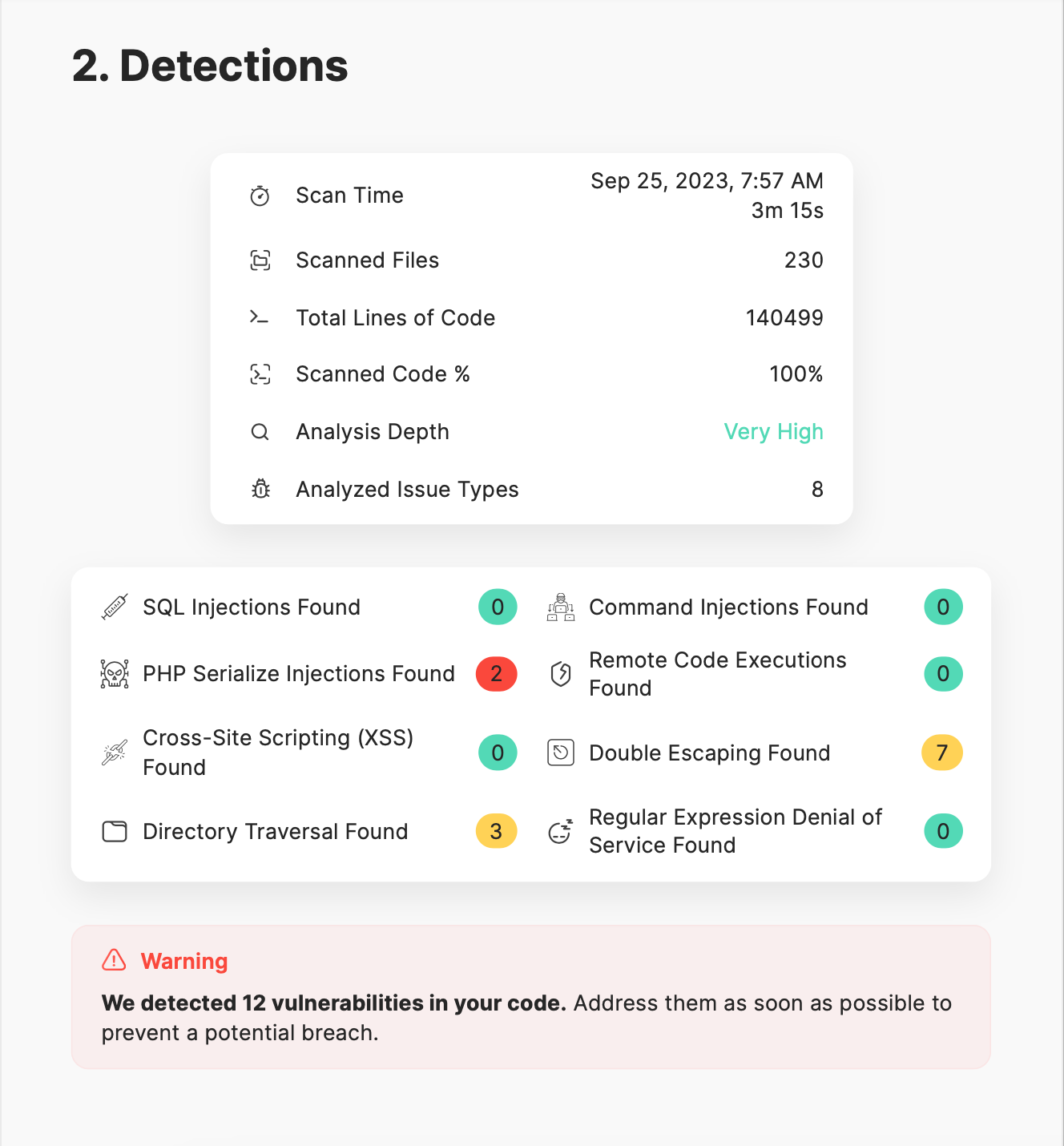
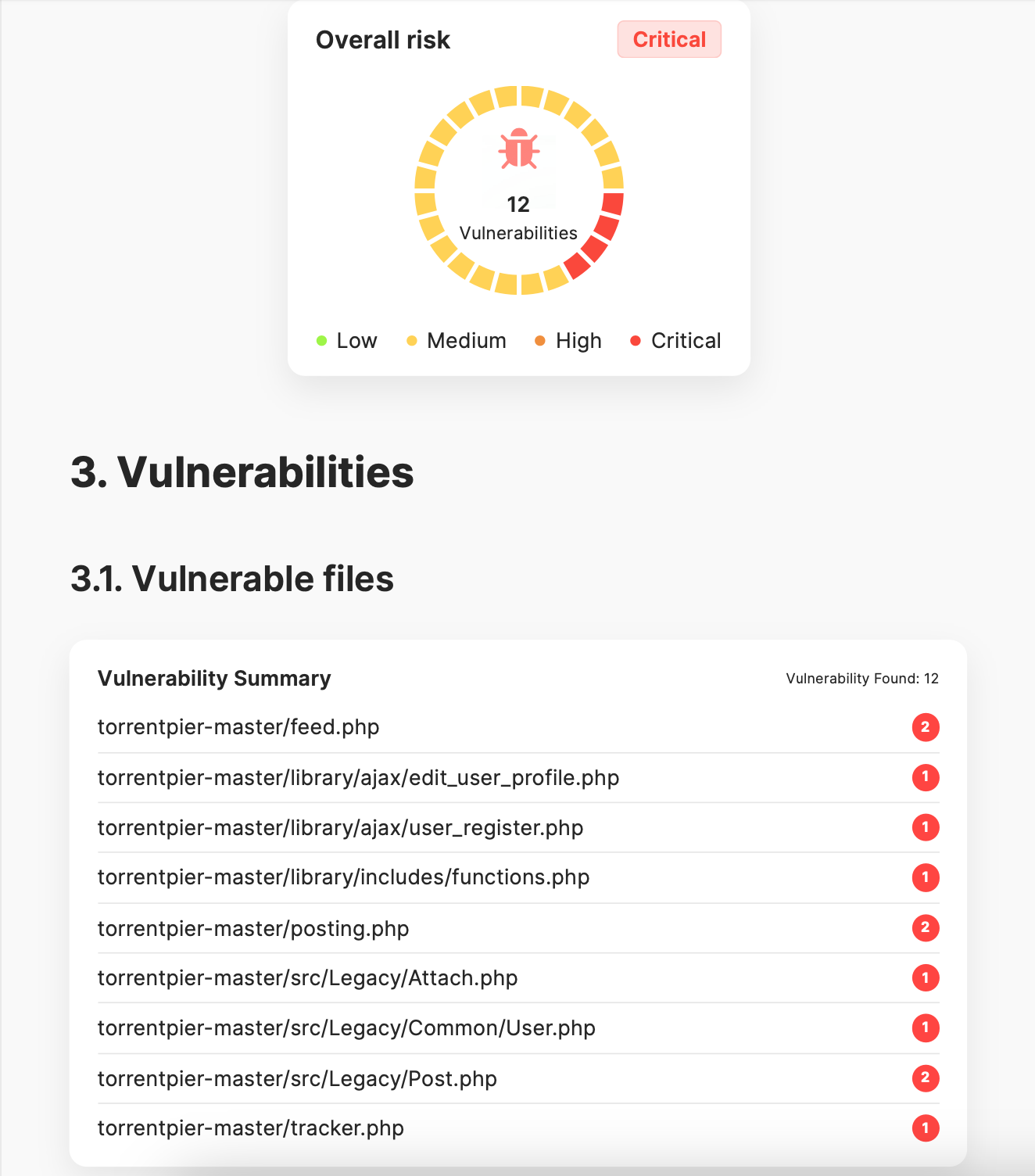
Hi, there. We've found PHP Serialize Injections in your project “torrentpier". According to the OWASP, it can pose a significant risk: enable an attacker to modify serialized objects in order to inject malicious data into the application code, resulting in code execution or an arbitrary reading of the file on any vulnerable system.
Details
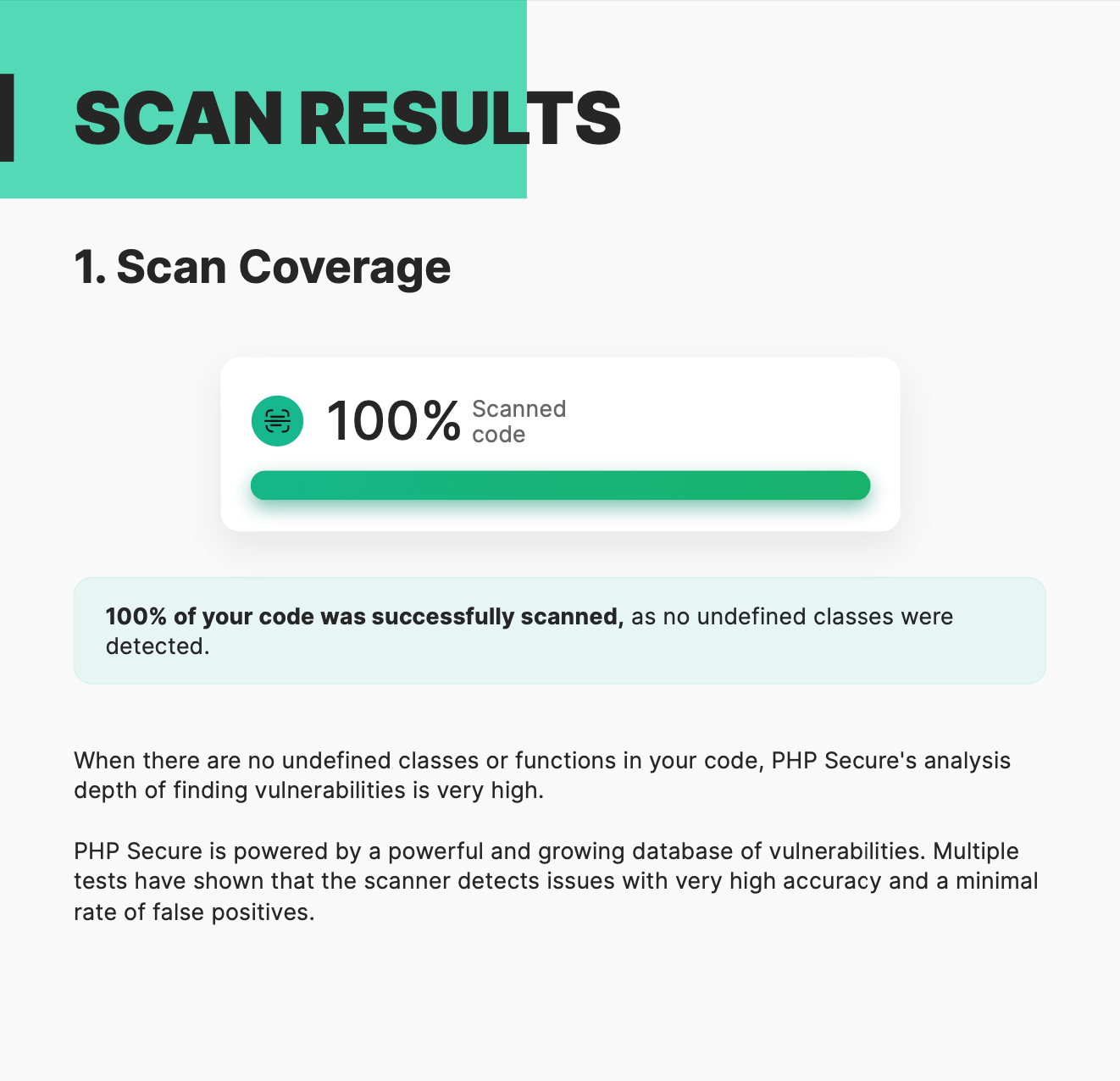
In the attachment you can find a report with the number of vulnerabilities, their types and the vulnerable files. To view the lines of vulnerable code you may scan your project with the "PHP Secure" vulnerability scanner with a full access to it.
PoC
About Us
We are a team of developers of the PHP Secure vulnerability scanner. First, we checked your code automatically. Then we reviewed the vulnerable code more deeply manually and felt it was necessary to report about it to you. We suggest you scanning your code and address vulnerabilities as soon as possible to prevent a potential breach.
If you have any questions, email us at support@phpsecure.net"
{
  "affected": [
    {
      "database_specific": {
        "last_known_affected_version_range": "\u003c= 2.4.3"
      },
      "package": {
        "ecosystem": "Packagist",
        "name": "torrentpier/torrentpier"
      },
      "ranges": [
        {
          "events": [
            {
              "introduced": "0"
            },
            {
              "fixed": "2.4.4"
            }
          ],
          "type": "ECOSYSTEM"
        }
      ]
    }
  ],
  "aliases": [],
  "database_specific": {
    "cwe_ids": [
      "CWE-502"
    ],
    "github_reviewed": true,
    "github_reviewed_at": "2026-05-11T17:53:20Z",
    "nvd_published_at": null,
    "severity": "CRITICAL"
  },
  "details": "### Summary\nHi, there. We\u0027ve found PHP Serialize Injections in your project \u201ctorrentpier\". According to the OWASP, it can pose a significant risk: enable an attacker to modify serialized objects in order to inject malicious data into the application code, resulting in code execution or an arbitrary reading of the file on any vulnerable system. \n                                        \n### Details\nIn the attachment you can find a report with the number of vulnerabilities, their types and the vulnerable files. To view the lines of vulnerable code you may scan your project with the \"[PHP Secure](https://phpsecure.net/?utm_source=github\u0026utm_term=torrentpier\u0026utm_content=torrentpier)\" vulnerability scanner with a full access to it.\n\n### PoC\n\u003cimg width=\"663\" alt=\"Screenshot 2023-09-25 at 11 12 32 AM\" src=\"https://user-images.githubusercontent.com/118765013/270273991-4a2c3884-3ab0-48ad-af77-3f3dbfa64e2a.png\"\u003e\n\u003cimg width=\"661\" alt=\"Screenshot 2023-09-25 at 11 12 43 AM\" src=\"https://user-images.githubusercontent.com/118765013/270274006-247ed9d3-2dc0-4a87-8f1f-89079c8be165.png\"\u003e\n\u003cimg width=\"664\" alt=\"Screenshot 2023-09-25 at 11 12 53 AM\" src=\"https://user-images.githubusercontent.com/118765013/270274018-b99d6ec2-4c5a-439f-b089-9e11345e963d.png\"\u003e\n\u003cimg width=\"662\" alt=\"Screenshot 2023-09-25 at 11 13 13 AM\" src=\"https://user-images.githubusercontent.com/118765013/270274023-36ecffc7-215d-41db-b3ba-6aa677e644d3.png\"\u003e\n\n### About Us\nWe are a team of developers of the PHP Secure vulnerability scanner. First, we checked your code automatically. Then we reviewed the vulnerable code more deeply manually and felt it was necessary to report about it to you. We suggest you scanning your code and address vulnerabilities as soon as possible to prevent a potential breach.\n\nIf you have any questions, email us at support@phpsecure.net\"",
  "id": "GHSA-h29g-c9cx-c73q",
  "modified": "2026-05-11T17:53:20Z",
  "published": "2026-05-11T17:53:20Z",
  "references": [
    {
      "type": "WEB",
      "url": "https://github.com/torrentpier/torrentpier/security/advisories/GHSA-h29g-c9cx-c73q"
    },
    {
      "type": "PACKAGE",
      "url": "https://github.com/torrentpier/torrentpier"
    }
  ],
  "schema_version": "1.4.0",
  "severity": [],
  "summary": "torrentpier has PHP Serialize Injections"
}
GHSA-H2JC-95W4-3PPP
Vulnerability from github – Published: 2026-06-17 18:35 – Updated: 2026-06-17 18:35Unauthenticated PHP Object Injection in Fidalgo <= 1.2.2 versions.
{
  "affected": [],
  "aliases": [
    "CVE-2026-39554"
  ],
  "database_specific": {
    "cwe_ids": [
      "CWE-502"
    ],
    "github_reviewed": false,
    "github_reviewed_at": null,
    "nvd_published_at": "2026-06-17T13:20:20Z",
    "severity": "HIGH"
  },
  "details": "Unauthenticated PHP Object Injection in Fidalgo \u003c= 1.2.2 versions.",
  "id": "GHSA-h2jc-95w4-3ppp",
  "modified": "2026-06-17T18:35:49Z",
  "published": "2026-06-17T18:35:49Z",
  "references": [
    {
      "type": "ADVISORY",
      "url": "https://nvd.nist.gov/vuln/detail/CVE-2026-39554"
    },
    {
      "type": "WEB",
      "url": "https://patchstack.com/database/wordpress/theme/fidalgo/vulnerability/wordpress-fidalgo-theme-1-2-2-php-object-injection-vulnerability?_s_id=cve"
    }
  ],
  "schema_version": "1.4.0",
  "severity": [
    {
      "score": "CVSS:3.1/AV:N/AC:H/PR:N/UI:N/S:U/C:H/I:H/A:H",
      "type": "CVSS_V3"
    }
  ]
}
Mitigation
If available, use the signing/sealing features of the programming language to assure that deserialized data has not been tainted. For example, a hash-based message authentication code (HMAC) could be used to ensure that data has not been modified.
Mitigation
When deserializing data, populate a new object rather than just deserializing. The result is that the data flows through safe input validation and that the functions are safe.
Mitigation
Explicitly define a final object() to prevent deserialization.
Mitigation
- Make fields transient to protect them from deserialization.
- An attempt to serialize and then deserialize a class containing transient fields will result in NULLs where the transient data should be. This is an excellent way to prevent time, environment-based, or sensitive variables from being carried over and used improperly.
Mitigation
Avoid having unnecessary types or gadgets (a sequence of instances and method invocations that can self-execute during the deserialization process, often found in libraries) available that can be leveraged for malicious ends. This limits the potential for unintended or unauthorized types and gadgets to be leveraged by the attacker. Add only acceptable classes to an allowlist. Note: new gadgets are constantly being discovered, so this alone is not a sufficient mitigation.
Mitigation
Employ cryptography of the data or code for protection. However, it's important to note that it would still be client-side security. This is risky because if the client is compromised then the security implemented on the client (the cryptography) can be bypassed.
Mitigation MIT-29
Strategy: Firewall
Use an application firewall that can detect attacks against this weakness. It can be beneficial in cases in which the code cannot be fixed (because it is controlled by a third party), as an emergency prevention measure while more comprehensive software assurance measures are applied, or to provide defense in depth [REF-1481].
CAPEC-586: Object Injection
An adversary attempts to exploit an application by injecting additional, malicious content during its processing of serialized objects. Developers leverage serialization in order to convert data or state into a static, binary format for saving to disk or transferring over a network. These objects are then deserialized when needed to recover the data/state. By injecting a malformed object into a vulnerable application, an adversary can potentially compromise the application by manipulating the deserialization process. This can result in a number of unwanted outcomes, including remote code execution.